


A sudden jolt, the sound of the landing gear slamming shut, the seatbelt sign lighting up: for those who are afraid of flying, turbulence is the most dreaded moment of a flight. Yet, in the vast majority of cases, it is an annoying but not dangerous phenomenon—the plane does not lose control, and the real risk mainly concerns those who are not wearing their seatbelts during a sudden jolt.
Every year, the specialized website Turbli publishes a ranking of the world’s most turbulent flight routes, based on meteorological data from NOAA and the Met Office and on approximately 10,000 flights between the 550 largest airports on the planet. The ranking once again confirms that major mountain ranges are the primary cause of turbulence—and in Europe, the route most prone to turbulence is the one between Geneva and Nice, which is also heavily trafficked by business jets.
But what does it actually mean to fly through turbulent air? And can the choice of aircraft—particularly a private jet—really make a difference in the comfort of the flight?
What is turbulence, and why does it occur more frequently on these routes?
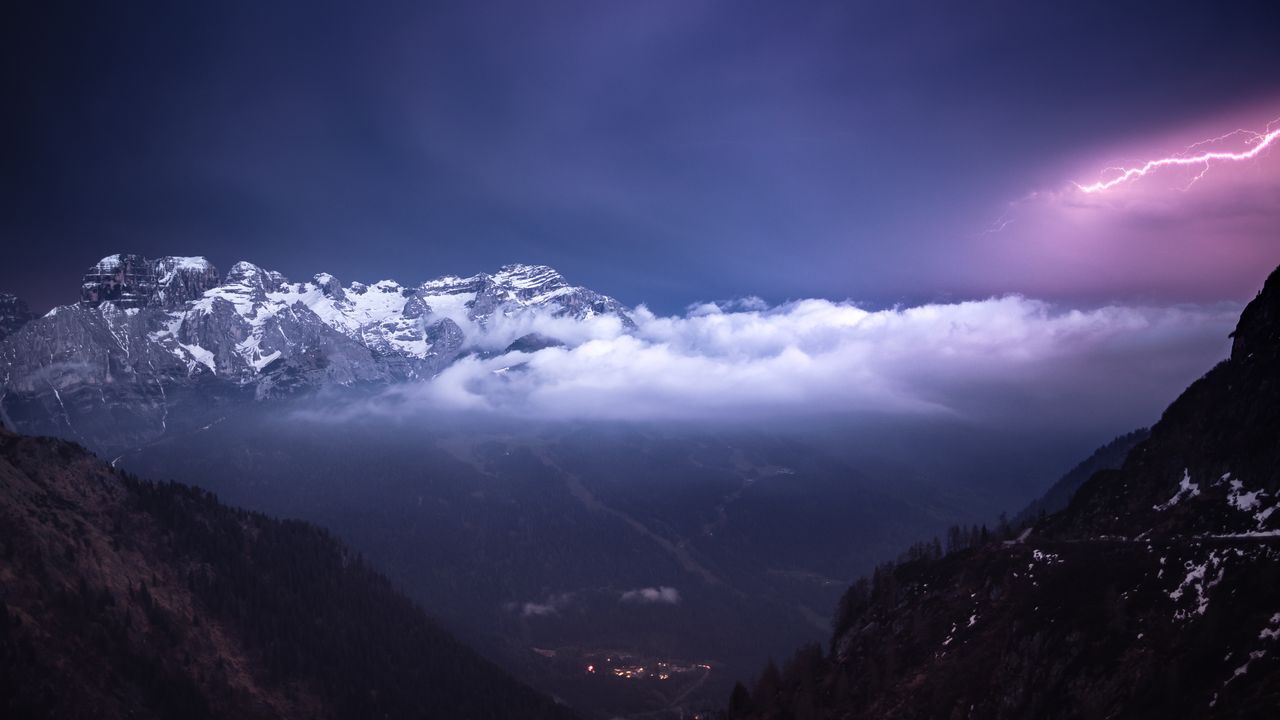
Turbulence arises from irregular air movements caused by various factors: jet streams, atmospheric fronts, thunderstorms, thermal convection, and winds encountering mountainous terrain. There is also clear-air turbulence (CAT), which occurs in clear skies with no visible clouds and is typical of areas near jet streams.
Mountain ranges, however, remain the most decisive factor: when an air current encounters a mountain range, the atmospheric flow distorts, generating what are known as mountain waves, which can propagate for hundreds of kilometers and affect aircraft even at high altitudes. This is why routes crossing the Andes, the Alps, the Rocky Mountains, and the Himalayas are statistically the most prone to this phenomenon.
Not all turbulence is the same. Turbli classifies it according tothe Eddy Dissipation Rate (EDR), the standard scale adopted by ICAO:
- 0–20 EDR — light turbulence: slight jolts or vibrations
- 20–40 EDR — moderate turbulence: may make it difficult to walk in the cabin
- 40–60 EDR — severe turbulence
- 60–80 EDR — severe turbulence: sudden movements, rare on commercial routes
- 80–100 EDR — extreme turbulence
It is important to note that no flight route in the world has an annual average that exceeds the mild-to-moderate threshold: the values in the rankings are averages based on hundreds of flights, not a guarantee of a rough ride on every flight.
The global ranking of the routes with the most turbulence
According to Turbli data, the routes with the highest average EDR in the world are:
- Mendoza (MDZ) – Santiago (SCL), Argentina/Chile — EDR 22,983
- Xining (XNN) – Yinchuan (INC), China — EDR 18,935
- Chengdu (CTU) – Xining (XNN), China
- Córdoba (COR) – Santiago (SCL), Argentina/Chile
- Santa Cruz (VVI) – Santiago (SCL), Bolivia/Chile
The Mendoza-Santiago route ranks first for the second consecutive year: it crosses the Andes over a distance of just 196 km and is known among pilots as a “mountain wave” due to the intensity of the mountain waves generated when flying over the mountain range. The rest of the global top 10 is dominated by South American and Chinese routes, all linked to major mountain ranges—the Andes and the Tibetan Plateau in particular.
A high figure does not mean that every flight on that route will experience turbulence: conditions vary from day to day, and the altitude and flight path actually followed by the crew have a significant impact on the actual experience on board.
Geneva-Nice: the European route with the most severe turbulence
In Europe, the average values are significantly lower than in South America or Asia, but the Alpine geography still creates a clear pattern. Turbli’s European ranking of the routes most prone to turbulence shows:
- Geneva (GVA) – Nice (NCE) — EDR 15.367
- Marseille (MRS) – Nice (NCE) — EDR 14.89
- Nice (NCE) – Basel (BSL)
- Milan (MXP) – Lyon (LYS)
- Zurich (ZRH) – Nice (NCE)
The Route Geneva – Nice was already ranked first in 2024, with an average EDR of 16.065 —a value slightly higher than in 2025, but still in the “light” category according to the Turbli scale. [LINK]
The explanation is geographical: the flight between Geneva and Nice passes through an area strongly influenced by the Alps, where the wind encounters the mountain range and generates the same dynamics observed on a much larger scale in the Andes. Eight of the ten European routes with the most turbulence begin or end in Switzerland, confirming that the Alpine arc is the true epicenter of this phenomenon on the Old Continent.
It is also a very popular route for business jet traffic—Nice is one of the busiest private airports in Europe, and Geneva is a historic hub for business aviation—which raises the legitimate question: Does a private jet offer a more comfortable flight than a commercial airliner on a route like this?
Is a private jet really less prone to turbulence?
The honest answer is: not inherently. Turbulence is an atmospheric phenomenon—if two aircraft fly through the same mass of turbulent air at the same altitude, they will both encounter it, whether it’s a commercial A320 or a business jet.
The real difference is operational, not aerodynamic. A private flight generally offers more flexibility in route planning: when conditions and ATC clearances permit, the crew can request a change in altitude or flight path to seek more stable air, drawing on pilot reports (PIREPs) provided by other crews who have just flown through the same area.
This does not mean that a private jet can avoid turbulence at will—it is still subject to air traffic clearances, aircraft performance, available fuel, and operational limitations. However, the greater freedom of maneuver, combined with the aircraft’s physical characteristics, can make a noticeable difference in onboard comfort.
The 5 Best Private Jets for Handling the Worst Turbulence
No jet is immune to turbulence: even a large business jet can experience significant movement when flying through an area of severe turbulence, whether in the Andes or the Alps. However, mass, size, wing loading, and flight control systems have a major impact on how much air movement is felt in the cabin. Here are the five most sensible choices, ranging from light jets to ultra-long-range models.
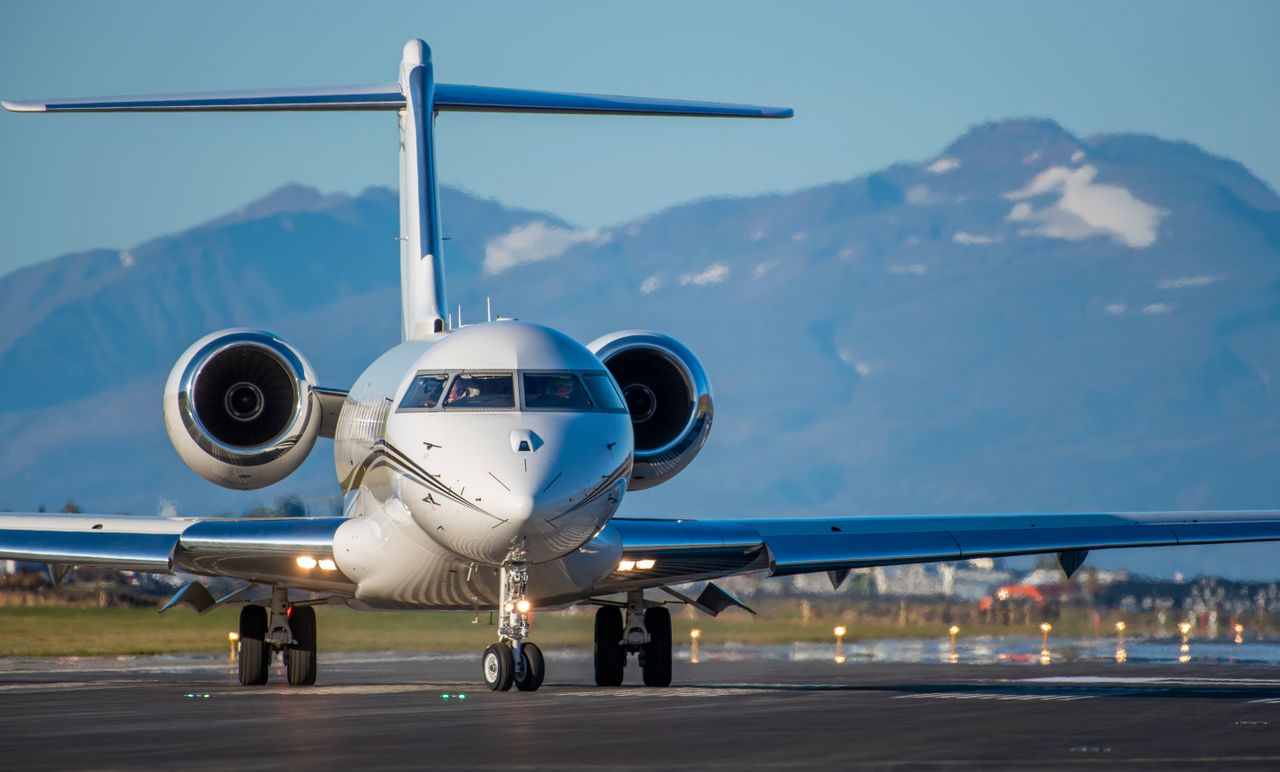
Bombardier Global 8000 and Global 7500
The two flagship models of the Global family remain the gold standard for those who prioritize comfort above all else. The aircraft’s substantial mass dampens minor disturbances, while the Smooth Flĕx Wing technology was developed specifically to improve wing response. The Global 7500 reaches Mach 0.925 and a range of approximately 7,700 nautical miles—figures more suited to intercontinental flights than a trip from Nice to Geneva, but the natural choice for those with no budget constraints.
Gulfstream G700
A maximum operating altitude of 51,000 feet and a maximum speed of Mach 0.935: figures befitting a true flagship. The high operating altitude does not mean “flying above turbulence,” but it gives the crew more flexibility to choose the most favorable flight level based on weather and traffic conditions. The cabin, with an interior pressure significantly lower than the flight altitude, further enhances the perceived comfort.
Embraer Phenom 300E
For a short route like Nice to Geneva, an ultra-long-range jet is often overkill. The Phenom 300E, at the top of the light jet category, climbs to 45,000 feet and offers a well-appointed cabin despite its compact size. It is likely the most sensible choice for this route: substantial enough to minimize the perception of turbulence, and well-suited to the actual duration of the flight.
Cessna Citation CJ4 Gen2
Another high-end light jet, with an operating altitude of 45,000 feet and a maximum takeoff weight of approximately 7,761 kg. Operating costs are lower than those of business jets in the next higher category, offering a good balance between comfort and charter rates on short- and medium-haul routes.
Pilatus PC-24
An operational altitude of 45,000 feet, a maximum takeoff weight of approximately 8,300 kg, and an unusually spacious cabin for its class. Its main strength remains its ability to operate from short, unpaved runways, but its relatively generous dimensions for a light jet still make it a solid choice for those seeking a good level of comfort without the costs of a large-cabin aircraft.
Frequently Asked Questions About Turbulence on Airplanes
Is turbulence dangerous? In the vast majority of cases, no: it results in annoying jolts but has no serious consequences. The real risk is to passengers who aren’t wearing their seatbelts during a sudden movement, which is why it’s always recommended to keep your seatbelt fastened even when the lights are off.
Does a private jet experience more or less turbulence than a commercial airliner? Neither is immune: both fly through the same air if they follow the same route and altitude. The difference lies in the operational flexibility that a private flight has in seeking a more favorable flight path, and in the physical response of the aircraft chosen.
Why is the Nice-Geneva route the one with the most turbulence in Europe? Because of its location: the route passes through an area strongly influenced by the Alps, where the wind colliding with the mountains creates the classic “mountain waves” responsible for ground turbulence.
Which private jet is best at reducing perceived turbulence? There is no such thing as an “anti-turbulence” model, but larger, heavier aircraft—such as the Global 7500, Global 8000, and Gulfstream G700—tend to make minor disturbances less noticeable than a much lighter jet.
Would you like to charter a private jet on a route such as Nice to Geneva with the utmost comfort?
Contact us: We’ll analyze the route and your needs to recommend the aircraft and configuration best suited to your trip.
The post The World’s Most Severe Turbulence and the Best Private Jets to Handle It first appeared on Private Jet Finder BLOG.