



Starting April 1, 2027, the United Kingdom will change the way it applies the Air Passenger Duty (APD) to private and business jets. The change primarily affects aircraft that are currently used for private aviation but do not fall into the highest tax bracket.
The decisive criterion will be the maximum takeoff weight, referred to by the acronym MTOW (Maximum Take-Off Weight). The new regulations will, in fact, extend the higher rate of Air Passenger Duty to all aircraft weighing 5.7 metric tons or more that are used as private jets or business jets.
This has significant implications, particularly for some light jets and smaller business jets. An aircraft such as the HondaJet Elite II, with a maximum takeoff weight (MTOW) of 5,035 kg, remains below the threshold; a Cessna Citation CJ3 Gen3, with an MTOW of 6,291 kg, exceeds it.
For those chartering a private jet from London and the United Kingdom, therefore, starting in 2027, the model of jet used may carry greater weight in the calculation of the tax component of the trip and in the final price.
What is the Air Passenger Duty?
Air Passenger Duty, commonly abbreviated as APD, is a British tax levied on passengers departing from airports in the United Kingdom.
Technically speaking, however, it is not the passenger who pays it directly to HMRC. APD is a tax owed by aircraft operators, who typically pass on the cost to the customer through the ticket price or, in the case of private aviation, through the cost of the charter.
The amount of Air Passenger Duty depends primarily on two factors: the flight’s destination and the aircraft’s tax category.
Destinations are divided into categories based on the distance between London and the destination’s capital:
-
Domestic: flights within the United Kingdom;
-
Band A: up to 2,000 miles;
-
Band B: 2,001 to 5,500 miles;
-
Band C: over 5,500 miles.
The distance used to determine the tax bracket does not necessarily correspond to the distance actually traveled by the jet. In fact, the APD system uses the distance between London and the capital of the destination, in accordance with the rules established by HMRC.
What Will Change Starting April 1, 2027
The change applies to the higher rate of Air Passenger Duty.
Currently, this rate applies to affected flights involving aircraft weighing at least 20 metric tons and configured to carry fewer than 19 passengers. This condition excludes many lighter private jets from the higher rate.
Effective April 1, 2027, the specific threshold for private jets and business jets will be lowered to 5.7 metric tons.
In other words, a private jet with a maximum takeoff weight (MTOW) of 5,700 kg or more that falls under the scope of the APD will be subject to the higher rate.
The change was confirmed by the British government following the consultation on the reform of the Air Passenger Duty for private jets. The measure will apply to passenger transport beginning on April 1, 2027.
MTOW (Maximum Takeoff Weight): Why Are These 5.7 Metric Tons So Important?
MTOW stands for Maximum Take-Off Weight, which is the maximum certified weight at which an aircraft can take off.
It is important not to confuse MTOW with the actual weight of the private jet at the time of departure.
In fact, an airplane can take off at a weight much lower than its maximum takeoff weight (MTOW), for example, because it is carrying few passengers or because the amount of fuel on board is less than the maximum possible.
For Air Passenger Duty, however, the parameter used for this classification is the maximum authorized takeoff weight, not the actual weight of the individual flight.
The 5.7-metric-ton threshold was not introduced for the first time with this reform. It is the limit already used by the British system to determine which aircraft are subject to Air Passenger Duty; in 2013, it was chosen as a compromise to include most of private aviation without imposing an excessive administrative burden.
The change for 2027 involves using that same threshold to extend the higher rate.
Which private jets flying from London will be subject to the Air Passenger Duty?
The change becomes easier to understand when we look at some concrete examples.
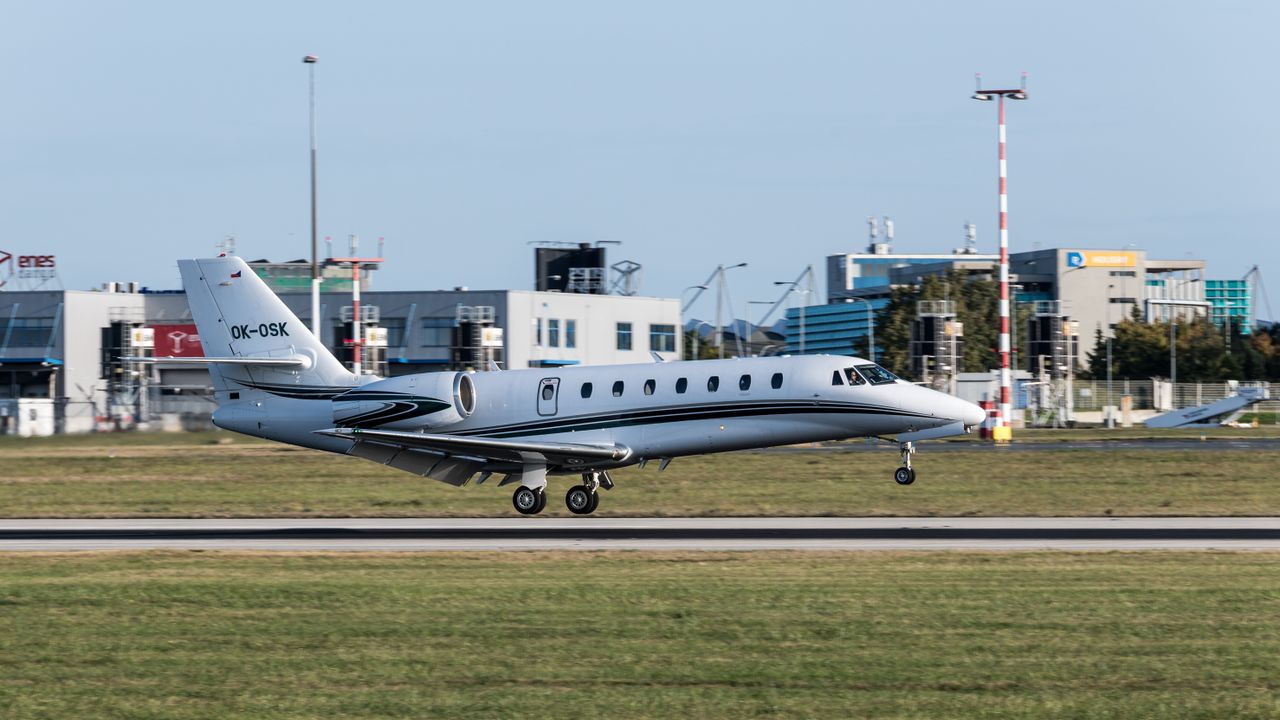
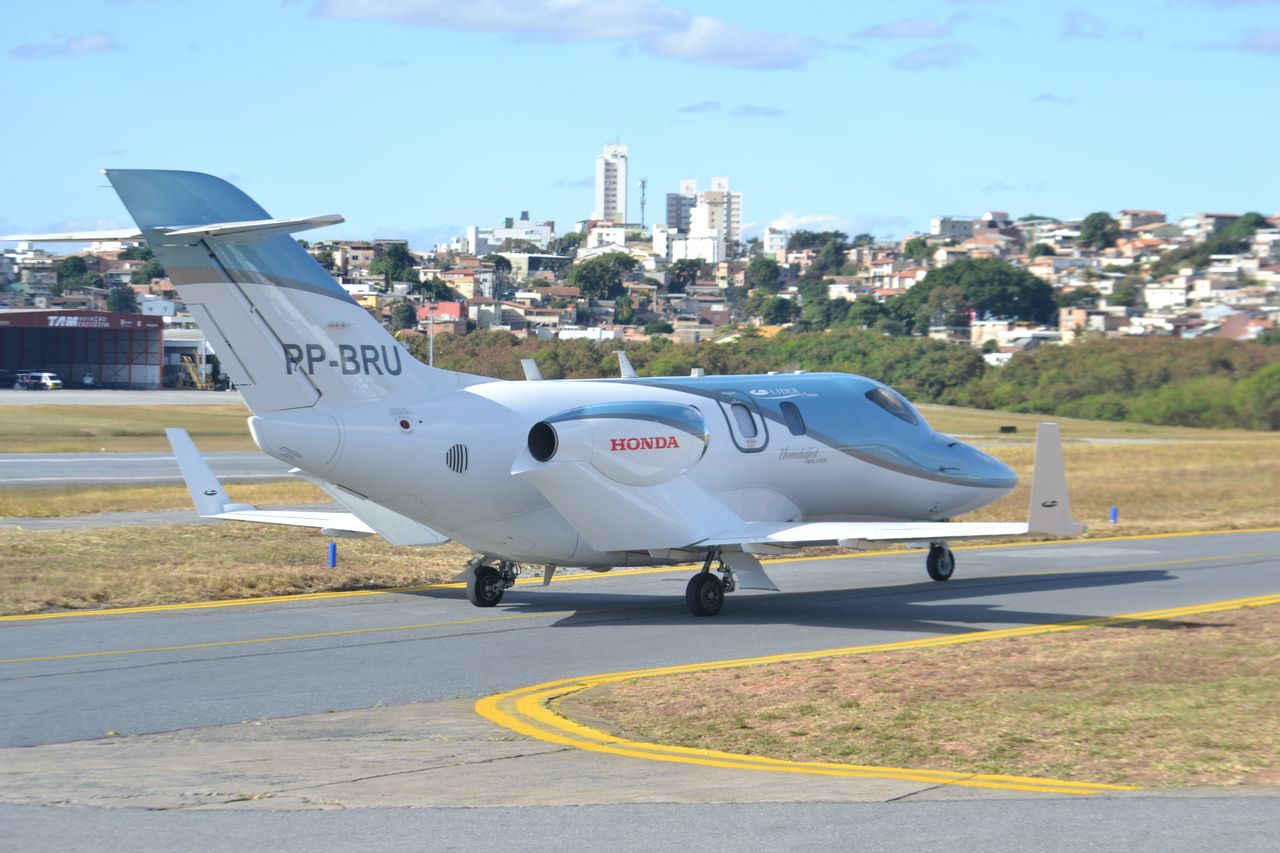
A HondaJet Elite II, for example, has a maximum takeoff weight (MTOW) of 5,035 kg. It is therefore below the 5,700 kg threshold.
The Cessna Citation CJ3 Gen3, on the other hand, has a maximum takeoff weight (MTOW) of 6,291 kg. It therefore exceeds the threshold and, as of April 1, 2027, will fall under the new “higher rate” category when used in accordance with the regulations.
The Cessna Citation CJ4 Gen3 has a maximum takeoff weight (MTOW) of 7,761 kg, while the Citation Latitude has an MTOW of 13,971 kg. Both are therefore well above the 5.7-metric-ton limit.
The Gulfstream G650ER, with a maximum certified takeoff weight (MTOW) of 46,992 kg, naturally falls within the category covered by the higher rate.
The result is interesting because the reform does not simply boil down to a distinction between small and large jets. For example, a Very Light Jet may fall below the threshold, while a relatively compact Light Jet may exceed it.
It is therefore not enough to simply look at the jet category
In the world of private aviation, the terms Very Light Jet, Light Jet, Midsize Jet, Super Midsize Jet, and Heavy Jet are commonly used .
These categories are useful for describing an aircraft’s capacity, range, and size, but they are not the tax criteria used by the Air Passenger Duty.
To determine whether the new higher rate applies, you must first verify the aircraft’s maximum certified takeoff weight (MTOW) and its intended use for regulatory purposes. This is an important distinction when comparing two aircraft intended for the same mission.
The HondaJet Elite II, for example, typically seats six passengers plus crew, while the Citation CJ3 Gen3 can accommodate up to ten people according to the manufacturer’s specified configuration. Despite similar missions, the difference in weight is sufficient to place the two models on opposite sides of the threshold introduced for the higher rate.
By how much will the Air Passenger Duty increase?
The second part of the reform concerns the tax rates.
For flights departing from airports in the United Kingdom—excluding the specific provisions for Northern Ireland and certain regions of Scotland—the higher rates effective April 1, 2027, will be:
- Domestic: £146.63 per passenger.
- Band A, up to 2,000 miles: £146.63.
- Band B, 2,001 to 5,500 miles: £1,132.76.
- Band C, over 5,500 miles: £1,178.20.
These amounts are per passenger.
For comparison, as of April 1, 2026, the higher rates will be £142 for Domestic and Band A, £1,097 for Band B, and £1,141 for Band C, respectively.
The difference between 2026 and 2027, therefore, does not stem solely from the extension of the higher rate to jets over 5.7 metric tons: the higher-rate tax rates had already been increased for 2026–27 and will be further adjusted starting in 2027–28.
For many private jets, the key difference is the change in tax bracket
For a jet that is already subject to the higher rate, the transition from 2026 to 2027 results in a relatively modest increase in the tax amount.
The most significant increase, however, applies to an aircraft that is taxed at the reduced or standard rate in 2026 but will be taxed at the higher rate starting April 1, 2027, because its weight exceeds 5.7 metric tons.
Let’s take a private flight in Class B.
In 2026–27, the standard rate is £244 per passenger, while the higher rate is £1,097. Starting in 2027–28, the standard rate will be £251.95 and the higher rate will be £1,132.76.
For a jet switching from the standard rate to the higher rate, therefore, the tax increase is not just a few dozen pounds: the difference in 2027 will be £880.81 per passenger compared to the standard rate.
With four passengers, the difference between the two rates would be £3,523.24.
With eight passengers, the total would be £7,046.48.
This does not mean that the price of chartering a private jet will necessarily increase by exactly these amounts. Air Passenger Duty is a tax charged per passenger, and how that cost is reflected in the quote is a business decision made by the operator.
London-New York and London-Dubai: How Much Will the Air Passenger Duty Increase?
Two of the most popular business aviation routes—to the United States and to the United Arab Emirates—both fall under Band B of the Air Passenger Duty, which covers flights between 2,001 and 5,500 miles according to the APD classification.
Starting April 1, 2027, for a jet subject to the higher rate, the APD will therefore be £1,132.76 per passenger on both routes.
For example, for London–New York, with:
- 4 passengers: £4,531.04
- 6 passengers: £6,796.56
- 8 passengers: £9,062.08
- 10 passengers: £11,327.60
For London-Dubai , the per-passenger fee is the same: with six passengers, the APD comes to £6,796.56; with eight, it comes to £9,062.08.
These amounts represent only the OTR theoretically due for those passengers on the route in question, not the price of the jet. The cost of the charter actually includes many other items: the aircraft, crew, fuel, ground handling, navigation, any airport fees, aircraft positioning, overnight crew, and other operating costs.
The actual distance traveled by the jet is not the criterion used to move a flight from one APD band to another: it is the official destination classification system that determines the applicable band.
- See also: Private Jets to Dubai: Luxury Nonstop Flights.
London, Milan, Geneva: How Much Does the Price of a Private Flight in Europe Increase?
For major European destinations, the Air Passenger Duty applied to private jets subject to the higher rate is significantly lower.
Band A, which includes destinations up to 2,000 miles from the British capital according to the criteria used by the Air Passenger Duty, will have a higher rate of £146.63 per passenger effective April 1, 2027.
Let’s take two routes frequently flown by the European business aviation sector: London–Geneva and London–Milan.
For a private jet subject to the higher rate, the APD falls under Band A for both destinations. With four passengers, the APD tax therefore amounts to £586.52; with eight passengers, it rises to £1,173.04.
A comparison with a Band B destination immediately shows how much the tax differential can affect the total cost. On the London–New York route, for example, the 2027 higher rate comes to £1,132.76 per passenger—more than seven times the amount applied in Band A.
It is important to note that these figures represent only the Air Passenger Duty and not the price of the charter. The total cost of a private flight also depends on the aircraft chosen, the jet’s availability and location, fuel, the airports used, ground handling, and other operating costs.
For those who need to choose a jet for a European route, therefore, the APD is a factor to consider in the final quote, but it is not necessarily the deciding factor in selecting the aircraft.
Does the Air Passenger Duty apply to commercial flights or private jets?
This is another important point.
Air Passenger Duty is calculated per passenger based on the destination and the aircraft’s tax category.
Therefore, a flat fee of £1,132.76 is not applied to an entire Gulfstream flight from London to New York. If there are eight passengers on board who are subject to the APD in Band B, the theoretical amount for the higher rate is:
£1,132.76 × 8 = £9,062.08.
With four passengers:
£1,132.76 × 4 = £4,531.04.
This is a crucial distinction when discussing tax increases on private jets.
Children and Minors on Private Jets: What About the Air Passenger Duty?
The reform also introduces a specific change for children and younger passengers.
The regulations stipulate that the exemption for children does not apply to passengers on business jets under the new rules. HMRC clarifies that the section on passenger exemptions will be amended to specify that the exemption for children does not apply to business jets.
This means that a family flying on a private jet will not be subject to the same rules that apply to younger passengers traveling in the lowest class on commercial flights.
However, separate rules apply to children under two years of age who are traveling without a seat; the APD regulations provide for specific exemptions for them.
What if the jet has seats in different configurations?
The cabin configuration can also be a factor in the standard APD system, because the rates are also linked to seat pitch— that is , the distance between a reference point on a seat and the same point on the seat in front of or behind it.
HMRC states that, in the case of private jets with seat pitches both above and below 40 inches, different calculation methods may be required.
However, the 2027 reform addresses a key issue for private aviation: when a jet exceeds the specified threshold and falls under the new definition, the higher rate is applied to passengers on private or business jets. The decisive date is the date of departure
Another practical consideration to keep in mind is the effective date. The new regulations, in fact, apply to passenger transportation beginning April 1, 2027. Consequently, to determine which tax regime to use, it is not enough to look at the date on which the charter is requested or booked.
A flight booked in 2026 but scheduled to depart from the United Kingdom after April 1, 2027, falls under the new tax period. Therefore, for those planning a private flight well in advance, the departure date becomes an important factor to consider along with the type of aircraft and the destination.
The United Kingdom Wants to Standardize Taxation on Private Jets
The official rationale for the reform is to standardize the tax treatment of private jets.
The British government argues that many lighter business jets, although already subject to Air Passenger Duty, have so far been taxed at the same rates as commercial flights because they did not meet the requirements for the higher rate. The extension of the threshold to 5.7 metric tons therefore aims to include in the higher bracket all private jets already subject to APD that exceed that limit.
The government also links the structure of the APD to the principle that longer trips, which are associated with higher emissions, result in higher taxes. However, official documentation specifies that the APD is not an environmental tax in the strict sense.
Criticism from the private aviation industry
The British consultation revealed a range of differing viewpoints.
Industry operators and associations have expressed concerns about the impact of higher taxation, particularly on segments with lower profit margins. In the consultation documents, some operators also pointed out the risk of a reduction in flights and the relocation of operations to countries with less burdensome tax regimes.
The official document also includes data provided by operators and brokers: 42% of respondents from these segments reported average margins below 5%, while 73% reported margins of 9% or less. Of course, these are figures provided by the participants in the consultation, not an official measure of the profitability of the entire sector.
Other participants, including environmental groups and a large majority of private individuals who responded to the consultation, argued in favor of extending the higher tax rate, believing that the tax system should better reflect the impact of private aviation.
The government nevertheless confirmed the reform after reviewing the responses.
How many private flights will cost more?
The consultation also sought to estimate the quantitative impact of the change.
According to some responses received from the government, approximately 1,500 flights per year could be subject to the expanded higher tax rate. However, the same documentation specifies that this is an estimate provided by the consultation participants, accompanied by an assessment that the increase in tax revenue would be relatively modest.
Therefore, the estimated number of flights affected by the reform should not be confused with the total number of private flights operated in the United Kingdom.
The decision to fly by private jet could become more important
From the perspective of a customer chartering a private jet, one of the most interesting aspects of the reform concerns the comparison of aircraft.

Let’s imagine, for example, a European route on which two jets are available with operational characteristics compatible with the mission.
As we saw earlier, two jets used for similar destinations can fall on opposite sides of the 5.7-metric-ton threshold. This does not automatically mean that the first one will always be more cost-effective.
The choice of a jet depends on range, number of passengers, luggage, available airports, operating conditions, aircraft location, flight time, and charter price. Starting in 2027, however, the APD will become another factor to consider when comparing options.
For a large group, the tax component per passenger can amount to several thousand pounds. The final quote should therefore be evaluated by considering the total cost of the trip, not just the aircraft charter fee.
The difference between a jet under and over 5.7 metric tons
The reform’s true distinctive feature is therefore concentrated in a relatively narrow segment of the market.
- For jetswith a maximum takeoff weight (MTOW) below 5,700 kg, the new higher rate may not apply—provided, of course, that they meet all other conditions set forth by the APD regulations.
- Above 5,700 kg, starting April 1, 2027, private or business jets already subject to the APD will instead fall under the higher rate.
The threshold thus cuts across the business jet market. One model may be only slightly above the limit and another well above it, but for the purposes of the new regulations, both fall into the same “higher rate” tax category. This is a significant difference from the way aircraft are normally classified in business aviation.
Even large jets will pay more, but for a different reason
For a large private jet that was already subject to the higher tax rate before 2027, the threshold reform does not constitute a shift from one tax category to another.
A Gulfstream G650ER, for example, has a MTOW of nearly 47 metric tons and already falls into the category of heavy aircraft to which the higher rate applies under the previous regulations.
For these aircraft, the main change starting in 2027 is therefore the adjustment of the tax rates, not the transition to the higher rate.
The real structural impact of the reform, however, concerns jets weighing between 5.7 and 20 metric tons, which were previously eligible for lower tax rates.
Another increase in the cost of a charter flight from London and the United Kingdom

Air Passenger Duty alone does not determine the price of a private jet. A quote for chartering a private jet from London or the United Kingdom takes into account numerous operational and commercial variables. However, starting April 1, 2027, for certain aircraft, the price calculation will also need to account for the transition to the higher rate.
For a short European flight, the highest fare can be £146.63 per passenger. For a Band B destination, it rises to £1,132.76, and for a Band C destination, it reaches £1,178.20. The difference becomes particularly evident as the number of passengers increases.
For eight passengers, for example, the higher-rate APD will be £1,173.04 in Band A, £9,062.08 in Band B, and £9,425.60 in Band C.
Please note that these figures should not be confused with the price of the flight, but rather represent a potentially significant tax component of the total cost.
Air Passenger Duty 2027: What You Need to Know If You’re Chartering a Private Jet
Starting April 1, 2027, the most important piece of information to check will not be just the destination.
When booking a private jet departing from London or the United Kingdom, you should consider the following:
- the aircraft model;
- its maximum takeoff weight (MTOW);
- the destination and the corresponding APD bracket;
- the number of passengers subject to the tax;
- the departure date;
- whether any specific exemptions provided for by law apply.
- The threshold to keep in mind is 5.7 metric tons.
The HondaJet Elite II remains below this threshold; the Citation CJ3 Gen3, the Citation Latitude, and the Gulfstream G650ER exceed it, to an increasing extent.
The British reform, therefore, does not simply introduce a new tax on private jets: it changes the threshold at which a large portion of business aviation becomes subject to the highest rate ofAir Passenger Duty.
For those flying privately from the United Kingdom, starting in 2027, the type of aircraft used—along with the route and the number of passengers—will become an even more important factor in calculating the final cost of the trip.
Choosing the right jet, however, requires evaluating MTOW, passenger capacity, range, and now also the new higher-rate threshold.
PrivateJetFinder.com helps you choose the most suitable aircraft for your trip and read a clear, detailed quote, with each cost item separated from the others — including all applicable taxes , whether you depart from London , another UK airport or to any destination .
Useful Links
- Air Passenger Duty — extension of the higher rate (gov.uk)
- Updated Air Passenger Duty rates (gov.uk)
- Consultation on the reform of APD for private jets (gov.uk)
FAQ – Frequently Asked Questions About Air Passenger Duty
- What is Air Passenger Duty (APD)?
It is a UK tax charged per passenger on flights departing from airports in the United Kingdom, calculated according to the destination and the aircraft category.
- When does the new 5.7-tonne threshold come into effect?
From 1 April 2027. Until that date, the current rules remain in force, based on the 20-tonne threshold.
- Which private jets exceed the threshold and are subject to the higher rate?
All aircraft with an MTOW of 5.7 tonnes or more, regardless of their commercial category (Light Jet, Midsize, Super Midsize or Heavy Jet).
- How much will APD cost per passenger from 2027?
At the higher rate: £146.63 for Domestic and Band A destinations, £1,132.76 for Band B, and £1,178.20 for Band C.
- Is APD the only tax-related cost of a private flight departing from the UK?
Yes, it is the specific passenger tax covered by the APD rules; however, the overall charter cost also includes the aircraft, crew, fuel and other non-tax operating expenses.
- Who is responsible for paying Air Passenger Duty on charter flights from London and the UK?
APD is payable by the air carrier or operator responsible for the flight, which calculates the tax based on the passengers subject to APD and the characteristics of the aircraft and route. In the case of a private charter flight from London or elsewhere in the UK, the APD cost is normally included in the overall charter price and is therefore ultimately borne by the customer through the fare charged by the operator.
The post Air Passenger Duty: Which private jets departing from London will cost the most? first appeared on Private Jet Finder BLOG.