



Arranging a private flight to Northern Europe during the winter requires a few more checks than a trip during the warmer months. Snow, ice, and sub-zero temperatures can affect airport operations, aircraft preparation times, and the punctuality of departures.
The choice of airport, therefore, should not depend solely on its proximity to the destination or the availability of a runway suitable for the jet. It is also important to verify what services are actually available on the ground: de-icing, snow removal, heated hangars, technical assistance, refueling, and passenger support.
An airport equipped to handle ice, snow, and winter conditions can help ensure smoother operations, but it does not eliminate the possibility of delays or schedule changes. Weather conditions, runway conditions, and aircraft characteristics remain key factors.
De-icing and anti-icing: the first services to check
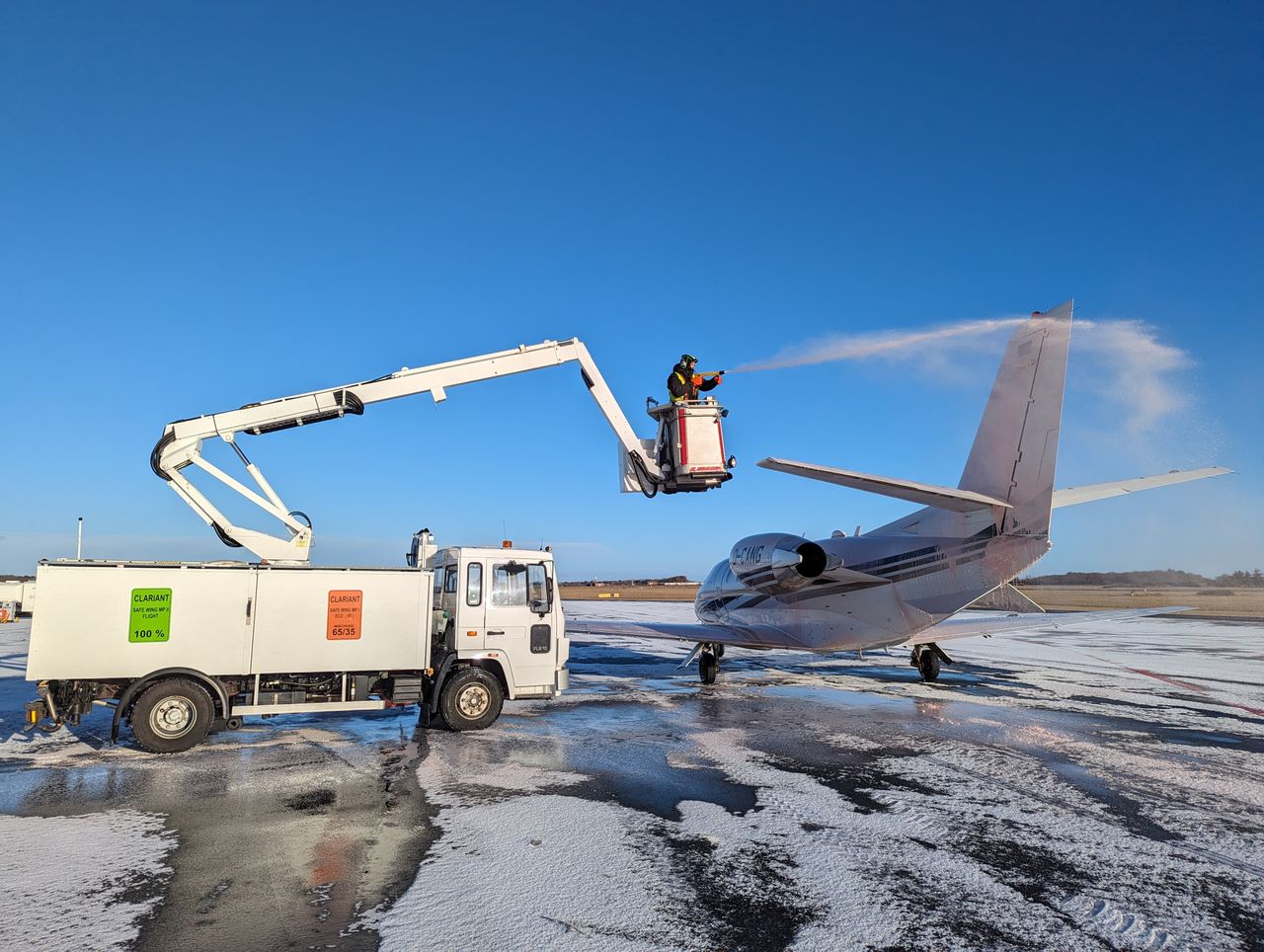
When a private jet must operate in conditions involving snow, ice, or frost, one of the most important services is the treatment of the aircraft’s surfaces. De-icing removes contaminants already present on the wings, fuselage, and other affected surfaces. Anti-icing, on the other hand, applies a protective treatment to limit the formation of new ice for a specific period of time.
The two operations can be performed separately or one after the other, depending on weather conditions and applicable procedures. Not all airports have the same equipment, the same operational space, or the same service organization.
Before choosing an airport, it is therefore advisable to verify that de-icing services are available for the jet’s category and size, whether they are performed on designated stands, and whether the service is operational during the flight’s scheduled time slots. It is also important to check wait times: during heavy snowfall, multiple aircraft may require de-icing at the same time.
To learn more about the procedures and understand why removing ice from the wing surfaces is essential, you can also read how de-icing works on an airplane’s wings.
Runways, Snow, and Ice: Airport Reporting
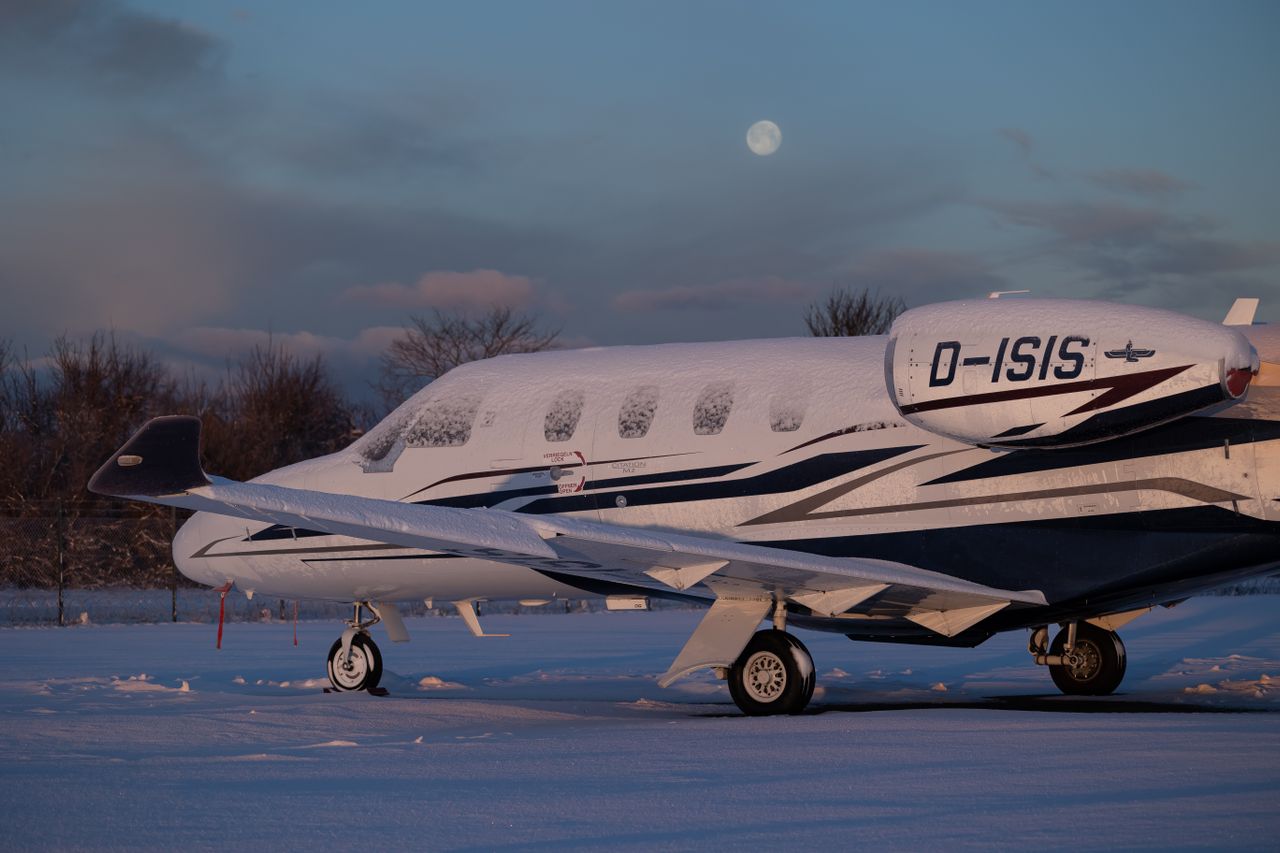
A second aspect to consider concerns the maintenance of airport infrastructure. In winter, the availability of snowplows, mechanical brushes, equipment for spreading de-icing agents, and systems for removing water from surfaces helps keep runways, taxiways, and aprons operational.
However, a runway can still be declared operational even if contaminants are present: what matters is the assessment of its condition and communicating that information to the pilots. The airport reporting system uses the Runway Condition Code (RWYCC), a code that describes the surface conditions and helps the flight crew assess braking performance and the distances required for takeoff and landing.
For a private flight, it is therefore advisable to check not only whether the airport remains open during snowfall, but also how snow removal operations are managed, what the priorities are, and how frequently information on runway conditions is updated.
Snow and ice aren’t the only weather factors to consider. Strong winds can also affect operations, influencing runway selection and takeoff and landing conditions. We discuss this in our in-depth article on private jets and strong winds during takeoff and landing.
Hangars, Heating, and Technical Support

Having a hangar available can make all the difference when a jet needs to remain parked for several hours or overnight at an airport with very low temperatures. An indoor shelter protects the aircraft from precipitation and the buildup of snow and ice, in addition to providing more favorable conditions for certain maintenance operations.
However, one should not assume that every airport has hangars suitable for any aircraft. The dimensions, height, and width of the doors, the actual availability of space, and any operational restrictions must be verified in advance.
Even when it is not possible to park the jet, certain services can facilitate departure preparations. These include the Ground Power Unit (GPU), which supplies electrical power to the aircraft from the ground, and the Air Start Unit (ASU), used to provide the compressed air needed to start certain engines. The availability of these resources, along with technical assistance and ramp personnel, must be confirmed with the airport operator or the designated ground handler.
Heated hangars are a particularly attractive service at airports in colder destinations. To learn more, read the article on heated hangars as a ground service in cold destinations.
Fuel, Passenger Services, and Fluid Management
Winter services aren’t limited to the aircraft. An airport suited for business aviation must also be able to coordinate refueling, baggage handling, transfers, and passenger assistance.
It is helpful to check whether Jet A-1 fuel is available during the scheduled times, whether the service must be reserved in advance, and whether the supplier can refuel the aircraft directly at the parking bay. In the event of adverse weather conditions, the availability of personnel and equipment may affect turnaround times.
Another factor—less visible but equally important—is the management of the fluids used for de-icing and anti-icing. Airports with dedicated areas and collection systems can recover some of the fluids spilled during treatment, thereby limiting their release into the environment. In Oslo, for example, the airport system includes the collection of runoff liquids in areas designated for de-icing operations.
These services can also affect the organization and overall cost of the flight. For this reason, it’s helpful to consider—in addition to the charter fee—any expenses related to airport assistance, parking, and services requested during the layover. More details are available in the article on extra costs that affect the final price of a private jet charter.
Airports in Northern European destinations
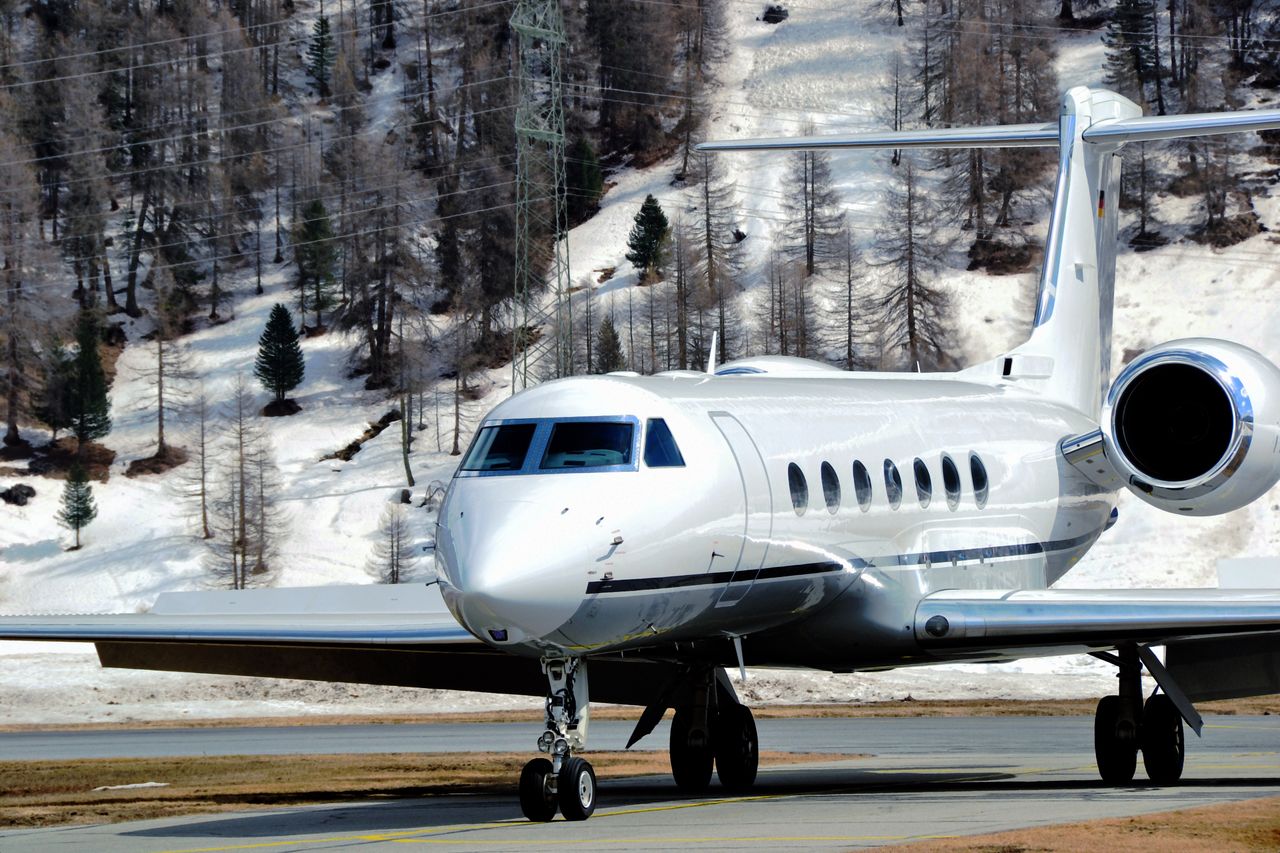
Riga, Oslo, Helsinki, Copenhagen, Amsterdam, Vilnius, and Warsaw are some of the destinations included in PrivateJetFinder’s offerings. These airports are not equivalent in terms of infrastructure, executive services, and winter operations: each has its own characteristics that should be evaluated before planning a flight.
Riga: 24-hour de-icing during the winter season
Riga International Airport (RIX), Latvia
Riga International Airport Riga has a well-structured system for managing private and business flights. De-icing service is available 24 hours a day from October through March; during the other months, it can be requested with advance notice.
The airport’s AIP lists remote de-icing pads near Runways 18 and 36, which can be used by aircraft up to Code E. Hangar space is also available for aircraft up to Code C, upon request. Jet A-1 refueling and ground handling services are available 24 hours a day.
For business aviation, RIX Ground Handling provides support for private and VIP flights, coordinating services such as refueling, de-icing, catering, transfers, and assistance with customs and immigration formalities. The VIP center features a lounge and a limousine service to and from the aircraft. It is recommended that you provide your flight details at least 24 hours in advance.
Destination: Fly to Riga on a private jet.
Oslo: Three Areas Dedicated to De-icing
Oslo Gardermoen Airport (OSL), Norway
Oslo Gardermoen Airport is particularly well-equipped for winter operations. Avinor, the airport operator, describes a system that uses three dedicated de-icing pads, depending on the runway and takeoff direction.
The treatment is performed when it is snowing, when there is freezing rain, or when frost forms on the aircraft’s surfaces. The fluid used is a mixture of hot water and glycol, with proportions that vary depending on the outside temperature.
One interesting aspect concerns environmental management: the aprons and certain areas of the taxiways and runways are equipped with liquid collection systems. This is a factor to consider when evaluating airport infrastructure during the cold season.
For those traveling by private jet, it is important to confirm with the ground handler the availability of support and handling services for that specific aircraft, as well as any potential wait times during peak winter travel periods.
Destination: Fly to Oslo on a private jet.
Helsinki: A Terminal Dedicated to Business Aviation
Helsinki-Vantaa Airport (HEL), Finland
Helsinki-Vantaa is one of the most attractive airports to consider for a private flight in the winter, thanks to its Business & VIP terminal and a range of services tailored to general and business aviation.
Finavia, the airport operator, coordinates de-icing operations, while ground handlers are responsible for carrying out the treatment. Airport procedures call for designated areas and specific coordination protocols. Planning is crucial: de-icing can alter the departure sequence and must be coordinated with other airport procedures.
Services available through the terminal and its FBO includeground handling, aircraft parking, hangar availability upon request, de-icing, refueling, GPU, ASU, drinking water, aircraft restrooms, and catering support. Services for passengers and crew are also provided.
The actual availability of hangars, vehicles, and technical services must, however, be confirmed for the flight date.
Destination: Flying to Helsinki by private jet.
Copenhagen: Several operators for private flights
Copenhagen Airport (CPH), Denmark
Copenhagen Airport has operators specializing in private flight services. Among those listed by the airport are Aviator Executive Handling, Menzies Executive Handling, and ASE Handling.
The presence of multiple handlers makes it possible to evaluate different solutions for passenger assistance, ramp operations coordination, and executive services. ASE Handling, for example, offers FBO services that include reception, transportation, catering, aircraft cleaning, and passenger assistance.
De-icing must also be taken into account during planning. The availability of de-icing services for a specific jet and the operating procedures must be confirmed with the designated ground handler. Furthermore, during the winter, any temporary closures of runways or designated areas may affect the organization of operations.
Destination: Fly to Copenhagen on a private jet.
Amsterdam: FBO and de-icing services for business flights
Amsterdam Schiphol Airport (AMS), Netherlands
Schiphol is a major hub for business aviation and also offers specialized services through FBO operators. Among these is Jet Aviation, which provides passenger and crew assistance, transfer coordination, catering, aircraft cleaning, and Jet A-1 refueling at the Dutch airport.
A particularly important consideration during the cold season is the availability of de-icing services for general aviation and business aircraft. Jet Aviation offers a dedicated service at its terminal, utilizing specialized equipment and procedures based on the use of de-icing fluids.
The presence of a specialized operator allows for the coordinated organization of various activities prior to departure. However, it is necessary to check in advance the service schedule, equipment availability, and any weather-related restrictions.
Destination: Flying to Amsterdam by private jet.
Vilnius: 24-hour de-icing and hangars available upon request
Vilnius International Airport (VNO), Lithuania
Vilnius International Airport provides 24-hour de-icing service and has designated areas for aircraft treatment. The AIP lists stands W1, W2, W209, W211, and W212 among those used for these operations.
The airport also offers Jet A-1 refueling and 24-hour ground handling services, while the availability of hangars and maintenance facilities must be arranged in advance.
For unscheduled and general aviation flights, it is also important to consider the requirements for advance coordination. The AIP specifies PPR (Prior Permission Required) and recommends arranging ground handling at least 24 hours before the flight.
Vilnius may therefore be a destination worth considering for a winter trip, provided you carefully plan your arrival, parking, and the services you’ll need for your departure.
Destination: Fly to Vilnius on a private jet.
Warsaw: Ground Handling and De-icing Services
Warsaw Chopin Airport (WAW), Poland
Warsaw Chopin Airport has several ground handling providers, including LS Airport Services, Welcome Airport Services, and Excel Handling. The presence of these providers makes it possible to organize ground handling services for various types of aircraft, including those used in business aviation.
The airport’s aeronautical information also includes operational details regarding de-icing procedures. Before scheduling a winter flight, it is therefore advisable to check with the ground handling provider to determine which areas are available for de-icing, what the service hours are, and whether there are any restrictions based on jet type.
Warsaw also has companies specializing in aircraft maintenance, includingLOT Aircraft Maintenance Services, All4Jets Technics, and Jet Story. The presence of these facilities can be a useful factor to consider in the event of technical needs, but the ability to perform maintenance depends on the type of aircraft, the necessary authorizations, and the provider’s actual capabilities.
Destination: Flying to Warsaw on a private jet.
How to Plan Your Charter: Pre-Departure Checks
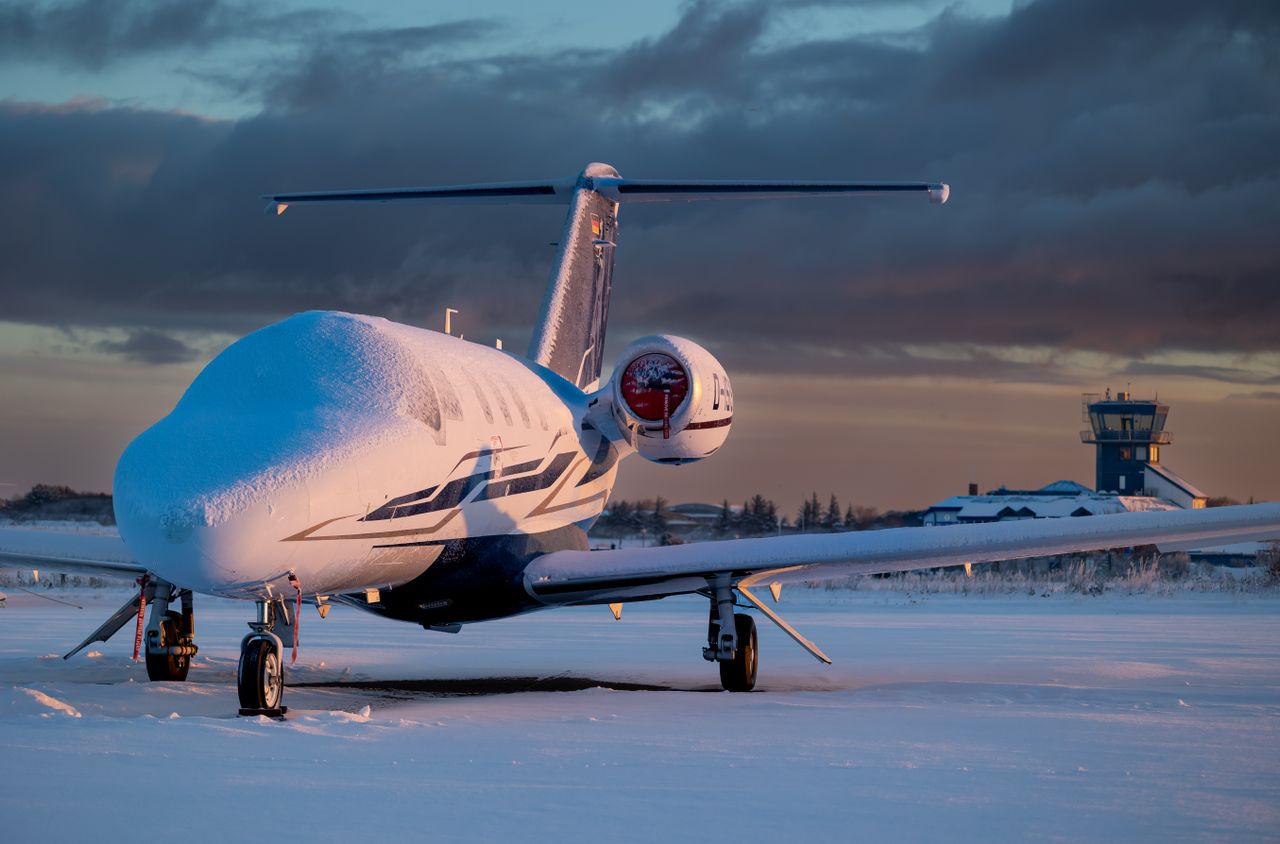
The choice of airport should not be based solely on the availability of de-icing services or a VIP terminal. It is necessary to evaluate the overall operating conditions, taking into account the jet model, the duration of the stop, and the scheduled arrival and departure times.
Before confirming the stopover, it is helpful to ask the ground handler whether de-icing and anti-icing services are available for that specific aircraft and during the requested time slot; what the expected wait times are during snowfall; whether hangars, GPUs, ASUs, and technical support are available; whether Jet A-1 refueling is guaranteed at the scheduled times; and what the procedures are for parking and managing the aircraft during an extended layover.
It is important to remember that the inclusion of a service in the list of airport facilities does not necessarily mean that it is available at all times or for every category of jet. Runway capacity, weather conditions, and aircraft performance must also be assessed by the operator and the crew.
Flying to Northern Europe in Winter with PrivateJetFinder
Riga, Oslo, Helsinki, Copenhagen, Amsterdam, Vilnius, and Warsaw are destinations that can be reached by private jet, but they require careful planning, especially during the cold season. Choosing the most suitable airport depends on the route, the aircraft’s specifications, the availability of ground services, and the passengers’ needs.
On the PrivateJetFinder blog, you can learn more about aircraft specifications, discover airports, read interesting facts about the world of private aviation, and find tips for planning a trip. To explore flight options to Northern Europe or request a personalized quote, please contact PrivateJetFinder.com.
The post Private Jet Airports in Northern Europe: Winter Services for Snow and Ice first appeared on Private Jet Finder BLOG.