



When a client contacts us to charter a private jet, one of the most common requests is to fly in a cabin that is as comfortable and quiet as possible. This is particularly important on long-haul flights, when being able to rest during the flight makes all the difference, but it’s also true for shorter trips: a soundproofed environment allows you to concentrate, finish up your last-minute work, attend a meeting, or simply arrive at your destination feeling well-rested.
Sound insulation is therefore an important feature in the design of a private jet’s cabin. Manufacturers invest in technology, sound-absorbing materials, and design solutions to minimize the noise produced by the engines and onboard systems.
When it comes to quietness, however, there is another aspect to consider: the aircraft’s external noise. This factor affects passengers less directly, but it can have consequences for the operations of certain airports, especially those subject to restrictions designed to limit noise pollution in the surrounding areas.
How is the noise level of a private jet measured?
To compare the quietness of private aircraft, it is necessary to distinguish between the noise perceived inside the cabin and the noise emitted outside the aircraft.
For the cabin, A-weighted decibels (dB(A)) and SIL (Speech Interference Level)—an index that takes into account the noise frequencies that can interfere with speech intelligibility—are primarily used. These values may vary depending on flight conditions, the location where the measurement is taken, and the interior configuration.
External acoustic certification, on the other hand, uses the EPNdB (Effective Perceived Noise Level), a unit that also takes into account the characteristics of the sound spectrum and the duration of the noise. Measurements are taken at three predetermined points:
-
Lateral (or sideline): Measures noise during takeoff, when the engines are at maximum power.
-
Flyover: measures the noise of the aircraft as it flies over a point along the takeoff path.
-
Approach: measures noise during the descent toward the runway.
EPNdB values are used for the acoustic certification of aircraft in accordance with international standards. They should not be confused with measurements taken inside the cabin: these are different parameters that describe different aspects of noise impact.
1. Dassault Falcon 8X
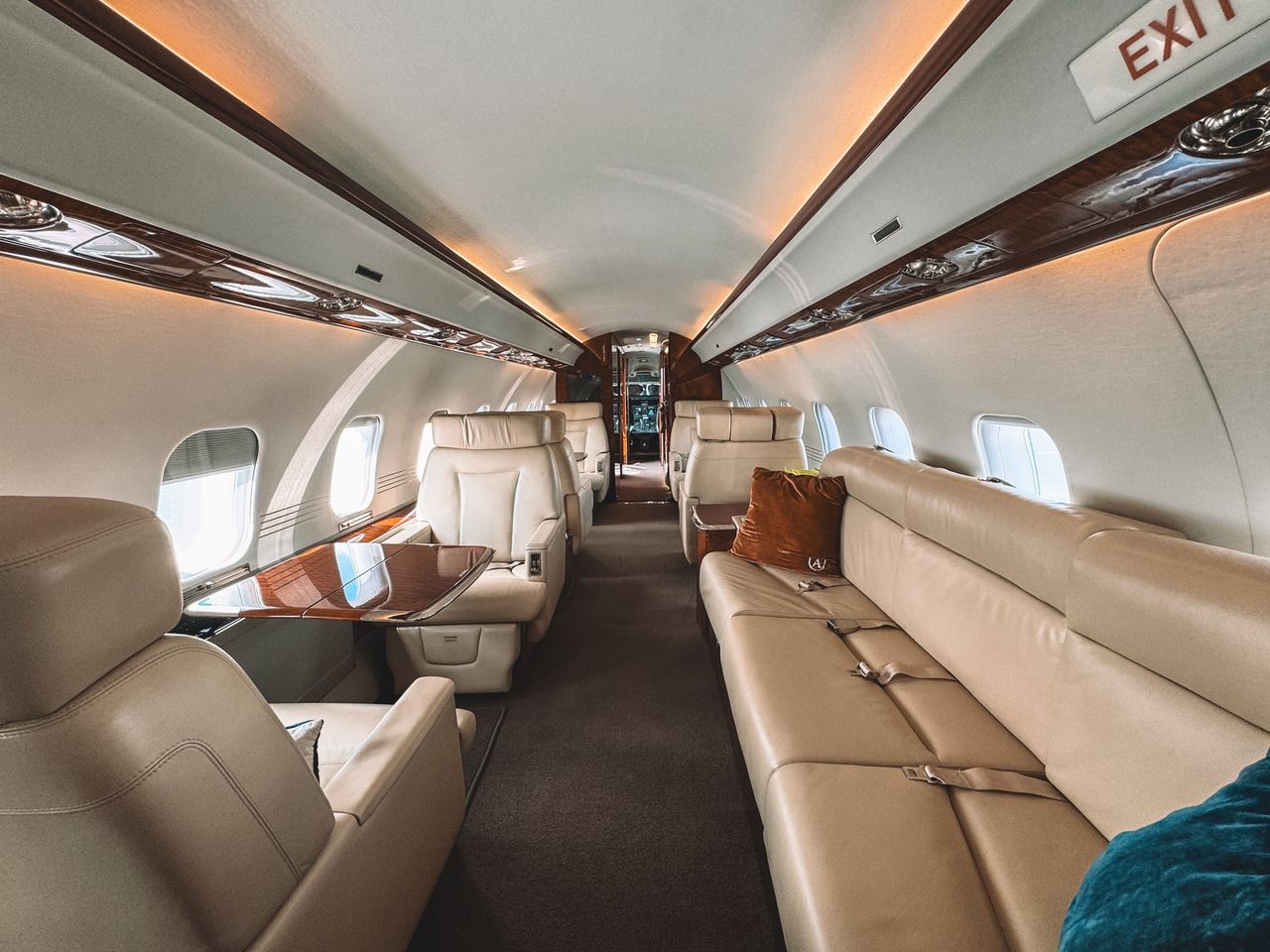
The Dassault Falcon 8X is a long-range private jet designed to offer a high level of comfort on intercontinental flights. The cabin is one of the model’s key strengths: the manufacturer has focused on soundproofing and vibration reduction to create an environment suitable for both rest and work.
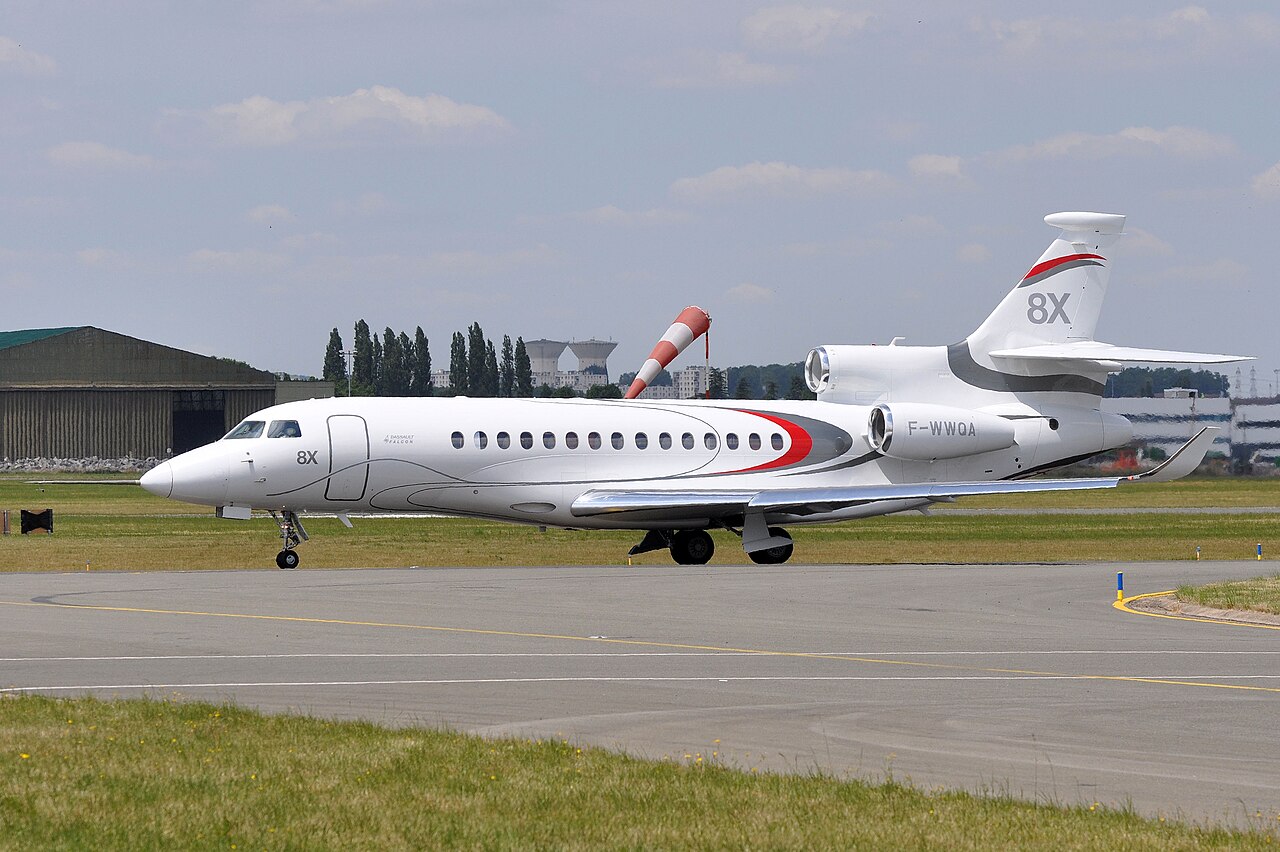
A comparative test conducted by Dassault Aviation found that noise levels in the Falcon 8X cabin were particularly low, with results that outperformed those recorded on the Gulfstream G650 under the test conditions.
Interior Noise Level in the Dassault Falcon 8X Cabin
-
47 dB SIL: value measured in the comparative test.
-
65 dB(A): level measured in the same test.
-
49 dB SIL: average value specified by the manufacturer, Dassault Aviation, in its documentation on acoustic comfort.
External Noise
-
Side: approximately 89 EPNdB.
-
Overflight: approximately 78 EPNdB.
-
Approach: approximately 90 EPNdB.
The external values listed in this data sheet are derived from tests, not from official certification data. For comparison with other aircraft, please refer to the noise documentation for the specific configuration.
Link: https://www.dassaultfalcon.com/businessjets/falcon-8x/
2. Gulfstream G600
The Gulfstream G600 is one of the leading models in the long-range private jet segment. The cabin is designed to provide comfort during flights that can last several hours, with particular attention to sound insulation, air quality, and the ability to rest on board.
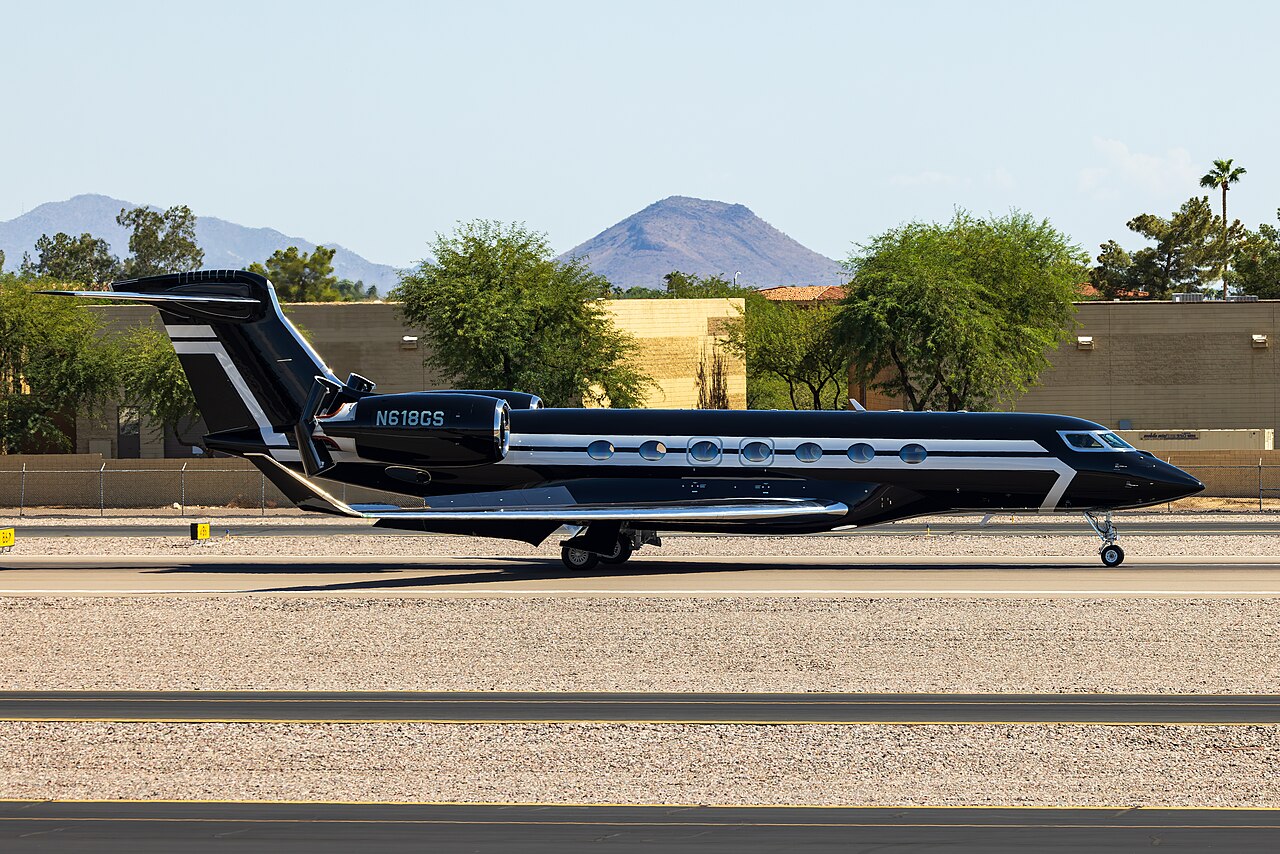
In the comparative test conducted by Gulfstream Aerospace, the G600 recorded a higher noise level than the Falcon 8X, though it was still moderate for an aircraft of this size.
Interior Noise Levels in the Gulfstream G600 Cabin
-
49 dB SIL: value measured in the comparative test.
-
67 dB(A): level measured in the same test.
External Noise
-
Side: approximately 88.3 EPNdB.
-
Overflight: approximately 78.3 EPNdB.
-
Approach: approximately 91.3 EPNdB.
The external values are based on the certification data available for the model; they may vary depending on the version and configuration in question.
3. Cessna Citation Longitude
The Cessna Citation Longitude is a super-midsize business jet developed by Textron Aviation with a particular focus on passenger comfort. Sound insulation is one of the areas the manufacturer focused on during the cabin’s design, making adjustments to materials and construction methods to minimize noise and vibrations.
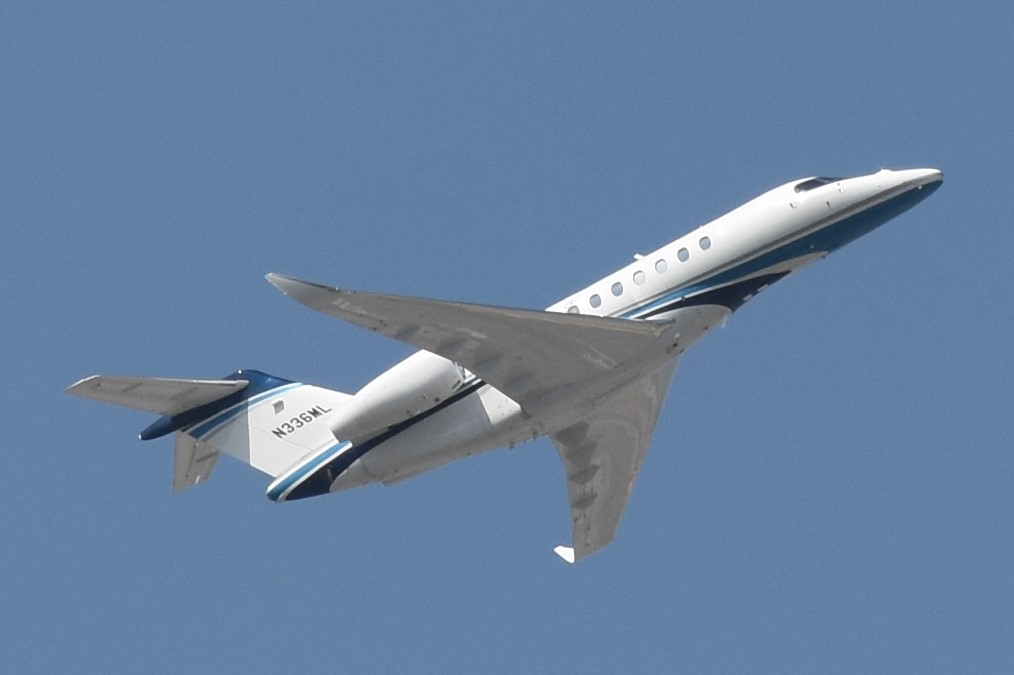
According to data published by Textron Aviation, the noise level in the rear of the cabin is 67.2 dB(A), as measured during flight at FL450 and Mach 0.80.
In-cabin Noise Level of the Cessna Citation Longitude
-
67.2 dB(A): value measured at the rear of the cabin at FL450 and Mach 0.80.
External Noise
-
Side: approximately 88.4 EPNdB.
-
Overflight: approximately 72.9 EPNdB.
-
Approach: approximately 89.9 EPNdB.
The Longitude is an attractive option for those looking for a super-midsize private jet with a cabin designed to promote relaxation and productivity during the flight.
4. Bombardier Challenger 3500
The Bombardier Challenger 3500 is a super-midsize business jet designed to offer comfort even on medium- and long-range flights. The cabin has been engineered to reduce perceived noise levels and allow passengers to converse, work, or rest during the flight.
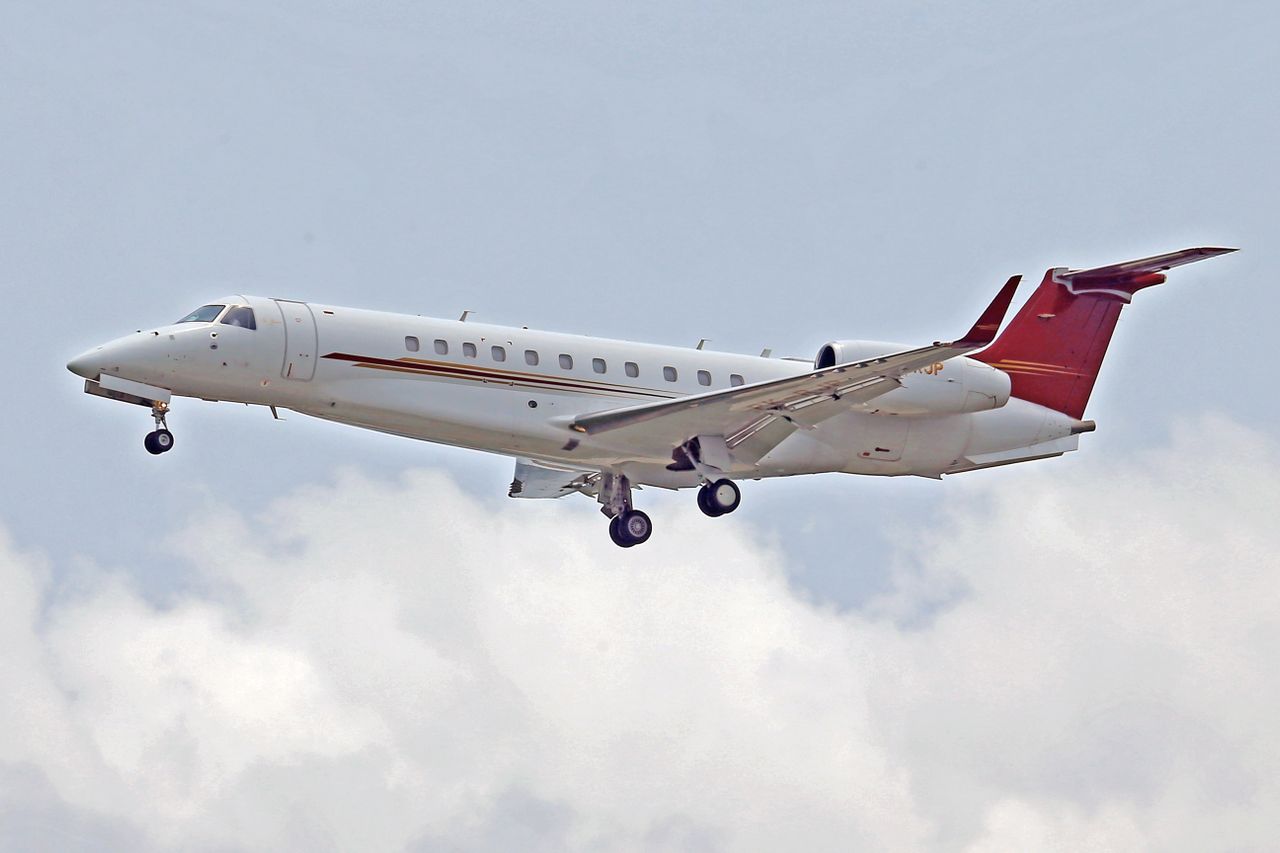
Bombardier has reported improvements in sound insulation compared to previous generations of the Challenger 300 family. Data published by the manufacturer describe a reduction in perceived noise levels but do not provide an absolute value that is directly comparable to all the other measurements listed here.
Interior Noise Level of the Bombardier Challenger 3500 Cabin
-
1–2 dB SIL reduction: claimed improvement over the previous version.
-
Up to 4–5 dB SIL reduction: a claimed improvement over previous models in the Challenger 300 family.
External Noise
-
Side: approximately 88 EPNdB.
-
Overflight: approximately 76 EPNdB.
-
Approach: approximately 90 EPNdB.
The external dimensions are approximate editorial estimates and do not replace those listed in the certification documentation for the individual aircraft.
5. HondaJet Elite II
The HondaJet Elite II is a light private jet developed by Honda Aircraft Company. The design stands out for its unique engine placement above the wings, a solution that helps reduce noise transmission into the cabin and optimize interior space.
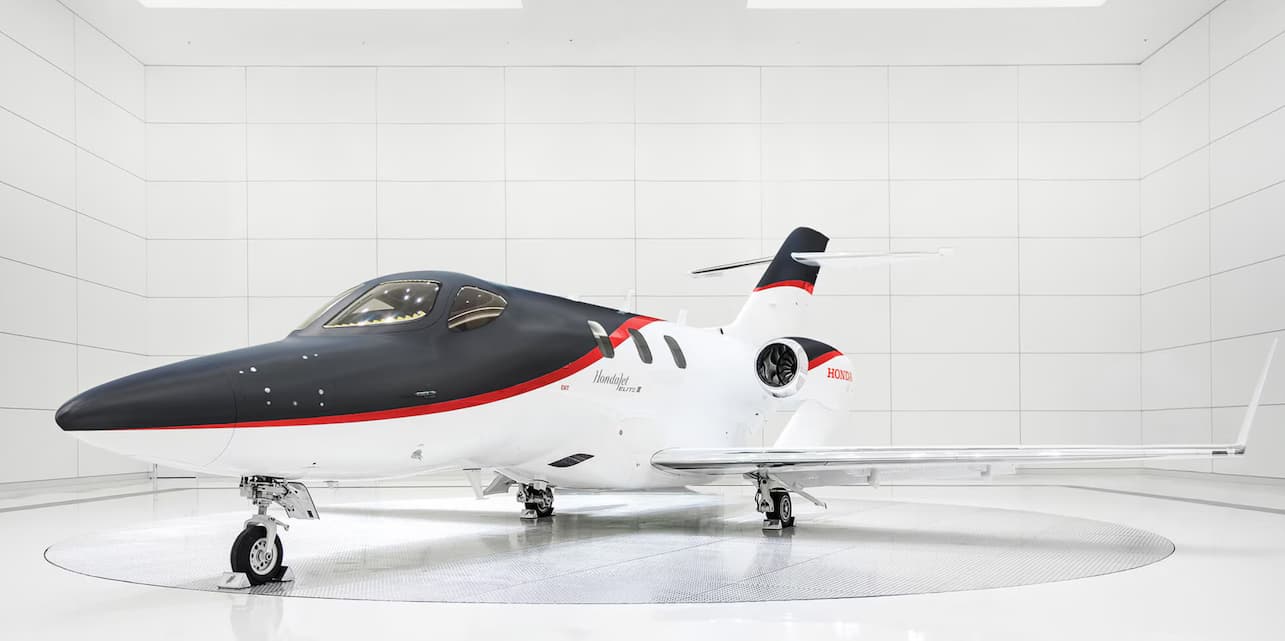
In the Elite II version, the manufacturer has introduced additional acoustic treatments to enhance passenger comfort. Although it is a very light jet, this model features a cabin that is sufficiently soundproofed to rank among the quietest private jets.
Interior Noise Levels in the HondaJet Elite Cabin
-
Approximately 64 dB(A): an approximate value reported by a specialized source for the cabin while cruising; this is not an official measurement published by Honda.
-
Improved soundproofing: confirmed by the manufacturer, though no official absolute value in dB is provided.
External Noise
-
Side: approximately 85.5 EPNdB.
-
Overflight: approximately 73.1 EPNdB.
-
Approach: approximately 87.4 EPNdB.
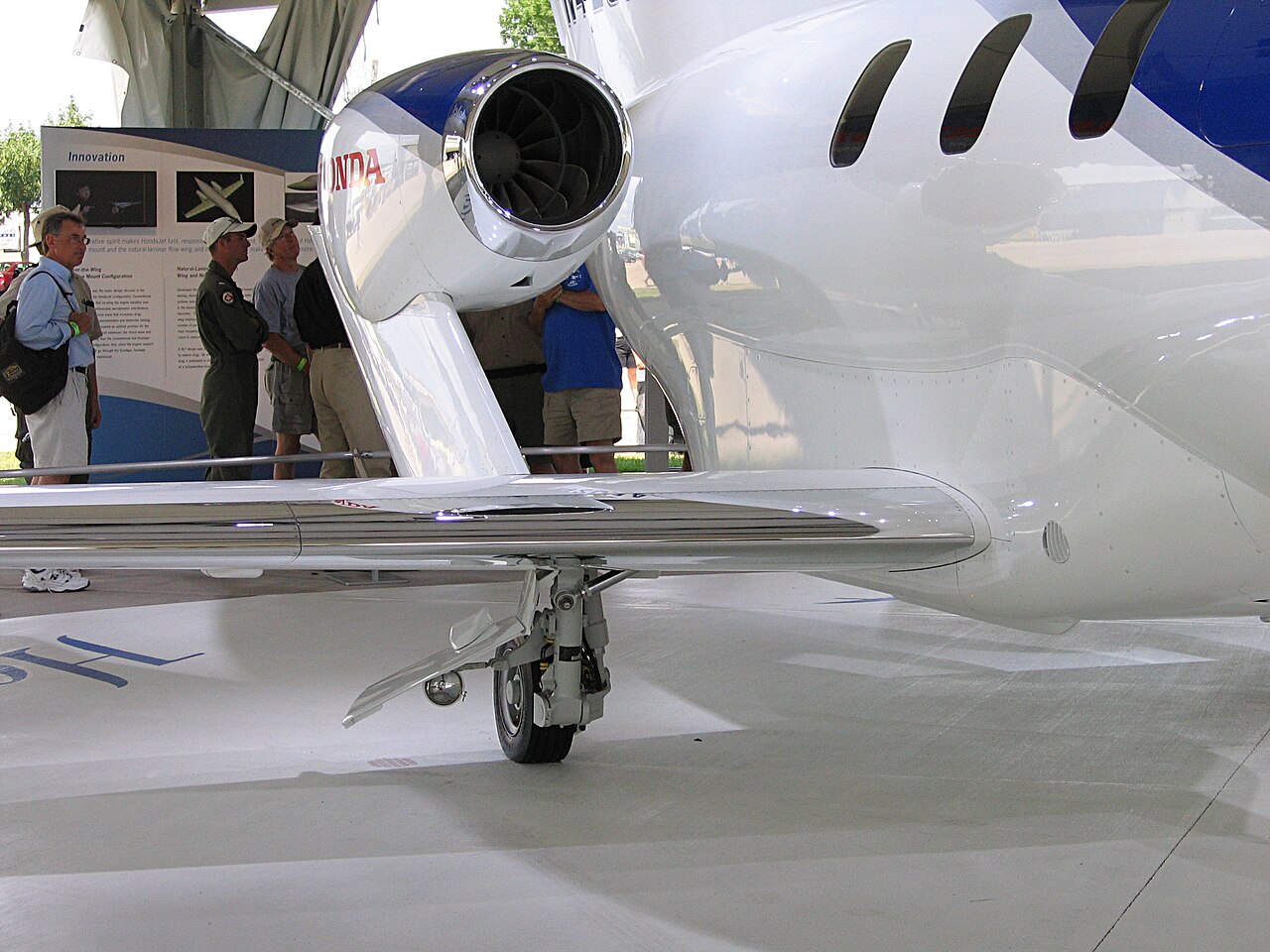
The over-wing engine layout is one of the distinctive features of the HondaJet design and contributes to its acoustic and aerodynamic characteristics.
What is the quietest private jet?
Comparing the noise levels of private jets is not easy, because the available data is not always consistent. Some manufacturers publish precise measurements in dB(A) or dB SIL, while others provide only percentage improvements or qualitative descriptions of their soundproofing systems.
Among the models examined, the Dassault Falcon 8X shows particularly impressive results in terms of interior acoustic comfort. In a comparative test with the Gulfstream G600, it recorded 47 dB SIL and 65 dB(A), compared to the competitor’s 49 dB SIL and 67 dB(A).
The Citation Longitude, in turn, provides concrete data, with a measurement of 67.2 dB(A) recorded at the rear of the cabin during flight. For the other models, however, the published information does not always allow for the establishment of a reliable ranking.
External noise levels also deserve attention, especially when choosing a departure or destination airport. Certified noise emissions can affect the operational restrictions imposed by some airports, but they are not the only factor to consider: operating hours, noise abatement procedures, runway characteristics, and any local restrictions also play a role.
Airplanes:
- Dassault Falcon 8X
- Gulfstream G600
- Cessna Citation Longitude Interior
- Bombardier Challenger 3500 Interior
See also: Say Goodbye to Travel Fatigue: Private Jet Cabin Configurations
External Noise, Noise Pollution, and Airport Restrictions
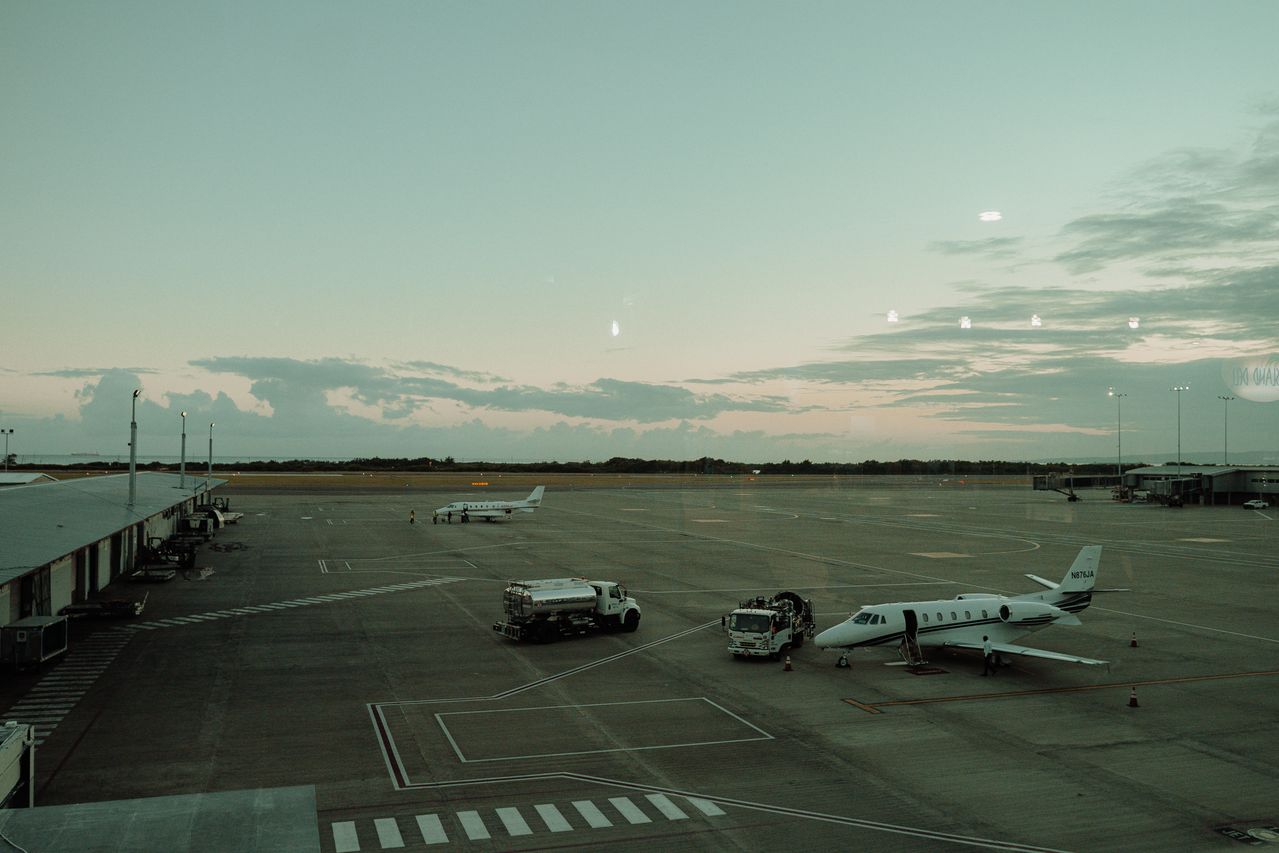
The quietness of an airplane is not just a matter of comfort for those on board. The noise generated during takeoff, flight, and landing also poses a significant environmental problem, especially at airports located near populated areas and residential neighborhoods.
Aircraft noise can affect the quality of life for people living in the areas surrounding airports. For this reason, in recent decades, the aviation industry has invested in the development of quieter engines, insulating materials, and design solutions capable of reducing noise emissions.
Balanced Approach and Airport Operations
The International Civil Aviation Organization (ICAO) has introduced the so-called Balanced Approach, an airport noise management system based on four main tools:
-
Noise reduction at the source through the development of quieter aircraft and engines.
-
Land-use planning and management in areas surrounding airports.
-
Operational procedures to reduce noise impact during takeoffs and landings.
-
Operational restrictions, such as limitations on aircraft movements or flights during certain time periods.
In Europe, the relevant regulation is EU Regulation 598/2014, which governs the introduction of operational restrictions to reduce noise at airports within the Union. The regulation applies to airports with more than 50,000 annual civil aircraft movements—calculated as the average over the previous three years—and to specific categories of large aircraft.
The restrictions may pertain to the number of takeoffs and landings, the use of certain aircraft, and nighttime operations. In addition to these provisions, there may be national regulations and local restrictions, which can vary from airport to airport.
For those who charter a private jet, choosing a model with low noise emissions can therefore be a useful consideration, especially when flying to airports located near areas with strict noise pollution regulations. However, lower noise levels do not automatically guarantee access to every airport or the ability to operate during all hours; it is always necessary to check the airport’s rules and operating conditions.
Source: EASA Balanced Approach
Would you like to charter a private jet to travel in the utmost comfort?
Contact PrivateJetFinder.com: We’ll help you find theaircraft that best suits for your needs, to reach your destination in the utmost comfort and with the peace of mind that comes with a tailor-made trip.
The post The Quietest Private Jets: A Comparison of 5 Models first appeared on Private Jet Finder BLOG.