



Private aircraft can continue to fly for decades, even far beyond the useful life one might expect for long-range aircraft. Their age, however, is not enough to determine whether they are still efficient, safe, and cost-effective to operate. What matters most are the accumulated flight hours, the maintenance performed, and the upgrades carried out over the years.
Some models designed in the 1970s and 1980s are still on the business aviation market. These include the Learjet 35A, the Dassault Falcon 50, and the Gulfstream III, while the Piaggio P.180 Avanti is an Italian example of a design capable of evolving across several generations.
How long is the service life of a private plane?
There is no standard service life for all private aircraft. An aircraft may remain in service for thirty years or more, but its service life depends on its design, the intensity of use, the environment in which it has flown, and adherence to maintenance schedules. An aircraft used frequently for short-haul flights can accumulate many takeoff, landing, and pressurization cycles; another, used primarily for longer flights, may experience a different distribution of stresses.
The availability of replacement parts and technical support from the manufacturer also affect the ability to keep a model in service. Over time, certain repairs can become more expensive or complex, especially when they involve systems that are no longer manufactured or equipment that requires upgrades.
Flight hours and flight cycles: What’s the difference?
Flight hours measure the time spent in operation, while cycles take into account operational events, such as takeoffs and landings. The two metrics are not interchangeable.
An aircraft operating on numerous short-haul routes can accumulate many cycles relative to its total flight hours. This data is important because various parts of the aircraft are subject to limits, inspections, or maintenance intervals defined in terms of hours, cycles, or a calendar schedule.
The activity log and technical documentation provide a better understanding of the aircraft’s previous use and the maintenance required to keep it airworthy.
Piaggio P.180 Avanti: The Italian turboprop that continues to evolve
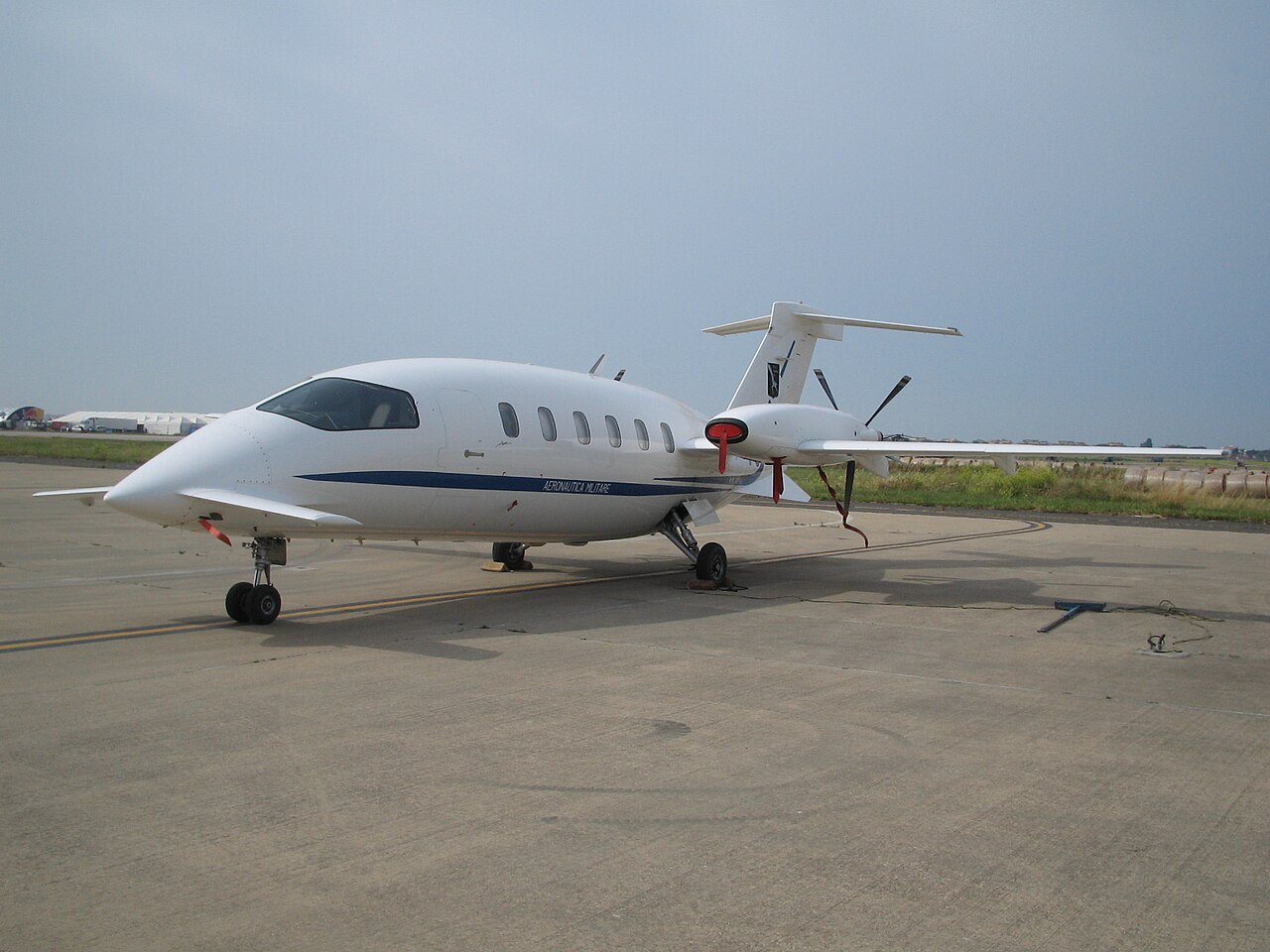
The Piaggio P.180 Avanti is one of the most recognizable designs in Italian business aviation. The prototype made its first flight in 1986, and the model received certification in 1990. Its aerodynamic configuration—with forward winglets and a swept-back main wing—sets it apart from conventional turboprops.
The P.180 was designed to combine speed, efficiency, and comfort on regional routes. Over the years, the design has been refined through successive versions, culminating in the Piaggio Avanti EVO, hailed as the fastest turboprop in its class, with updates affecting various systems and features of the aircraft.
The longevity of the Piaggio P.180 Avanti model is also documented by data published by the manufacturer. In December 2020, Piaggio Aerospace announced that the global fleet of P.180s had surpassed one million total flight hours. In the same press release, the company noted that some aircraft from the early production series were still in service. While this figure refers to the entire fleet and not to a single aircraft, it attests to the model’s long-standing presence in the industry.
The Piaggio P.180 Avanti also illustrates why one should not confuse the age of the design with that of each individual aircraft available today. Aircraft from different generations may have different equipment, configurations, and maintenance histories. To determine the condition of a specific aircraft, it is therefore necessary to review its documentation.
Turboprop or jet: Which lasts longer?
There is no general rule stating that a turboprop aircraft lasts longer than a jet aircraft, or vice versa. Service life depends on the design, usage, maintenance, and condition of the individual aircraft.
The Piaggio P.180 Avanti is a twin-engine turboprop aircraft, particularly suited for regional and domestic flights. The Learjet 35A is a twin-engine jet, while the Dassault Falcon 50 is a three-engine jet and the Gulfstream III is a twin-engine jet: these three jets belong to generations of business aircraft designed for different missions, including long-range flights.
To compare the service life of these categories, engines must also be taken into account. The airframe and the engines, in fact, have separate maintenance and overhaul schedules. An aircraft may still have a structure in good condition, but it may require major work on the engines or other components before it can continue to operate.
Learjet 35A: a light jet introduced in the 1970s
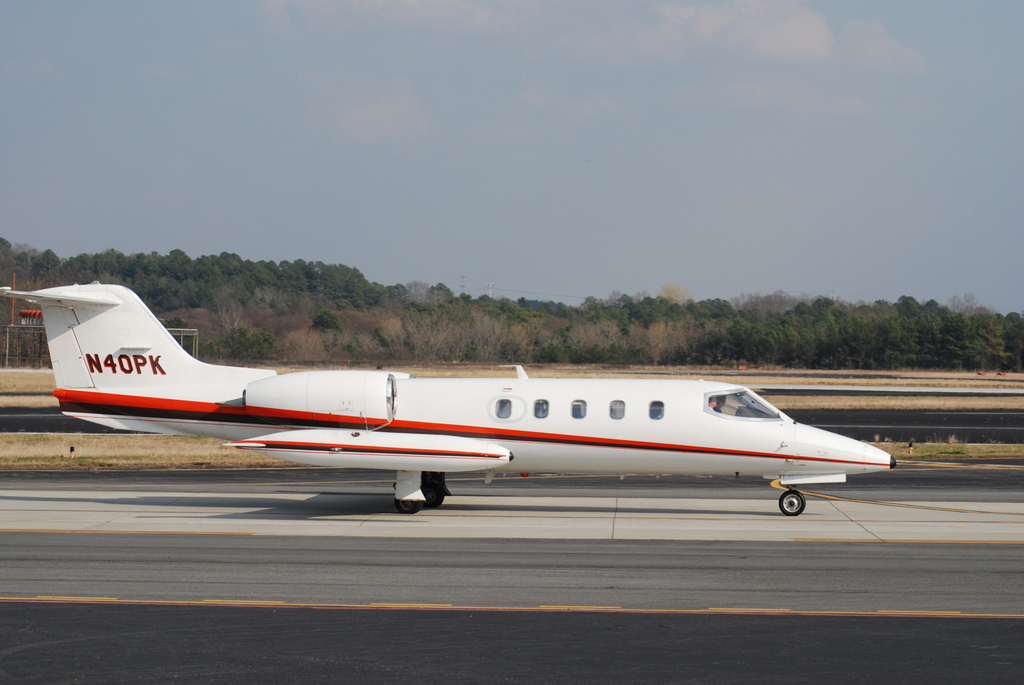
The Bombardier Learjet 35A belongs to a generation of business jets that helped establish high-speed business travel. Derived from the Learjet 35 family, it is a twin-engine jet used for executive transportation and other professional purposes.
The model gained popularity thanks to its relatively compact size and performance suited for flights between cities and business centers. As is the case with many jets from earlier generations, some aircraft continued to operate for many years, provided that maintenance, spare parts, and upgrades allowed them to remain in service.
However, the age of a Bombardier Learjet 35A alone is not sufficient to assess its cost-effectiveness. One must consider the condition of the airframe, engine hours, maintenance already performed, and maintenance scheduled for the short and medium term. The configuration of the cabin and onboard equipment can also affect its suitability for the needs of an operator or a customer.
Dassault Falcon 50: The Three-Engine Jet Capable of Crossing the Atlantic
The Dassault Falcon 50 is one of the most significant historic business jets for long-range missions. It made its maiden flight on November 7, 1976, and the model was designed to operate nonstop intercontinental flights, including transatlantic crossings.
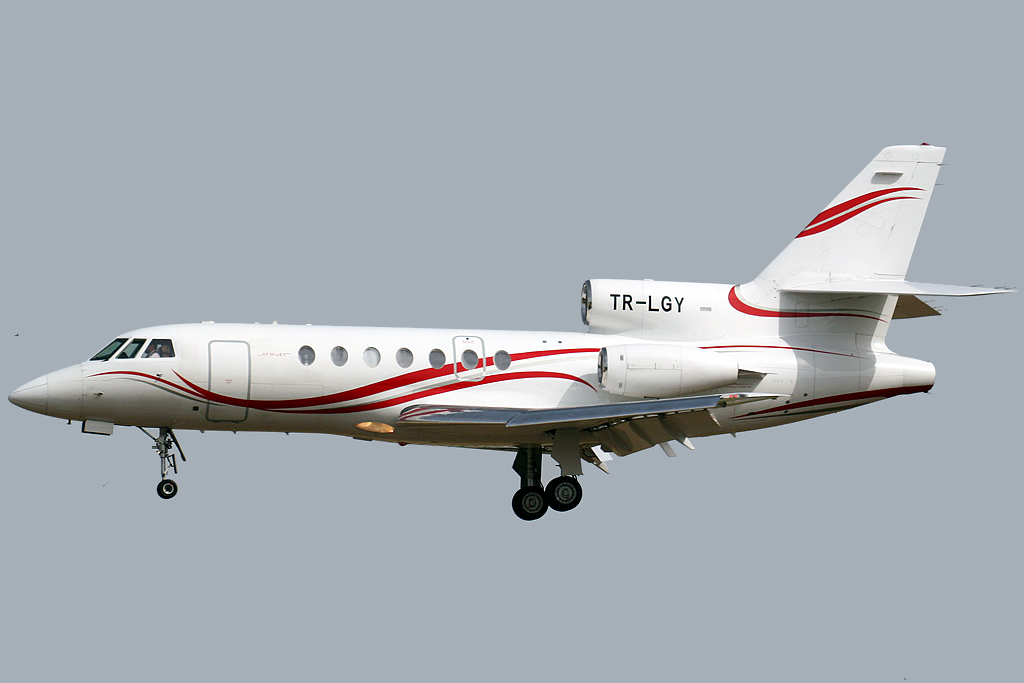
Its three engines and aerodynamic design set it apart from many contemporary business jets. The Dassault Falcon 50 was also the first mass-produced civil aircraft to feature a supercritical wing, a design feature that contributed to the development of subsequent Falcon families.
According to Dassault Aviation, the aircraft was designed to cover approximately 3,400 nautical miles—equivalent to 6,300 kilometers—under the reserve conditions specified in the regulatory reference cited by the manufacturer. This is a design figure: the actual range of a single flight depends on the configuration, payload, weather conditions, and other operational factors.
The longevity of the Dassault Falcon 50 demonstrates how a design developed for demanding missions can remain attractive even after many years. For an older aircraft, however, it is particularly important to assess the condition of the engines, systems, and avionics, as well as the availability of technical support. The characteristics of a historic model do not replace an inspection of the condition of the aircraft you intend to use.
Gulfstream III: A Long-Range Business Jet
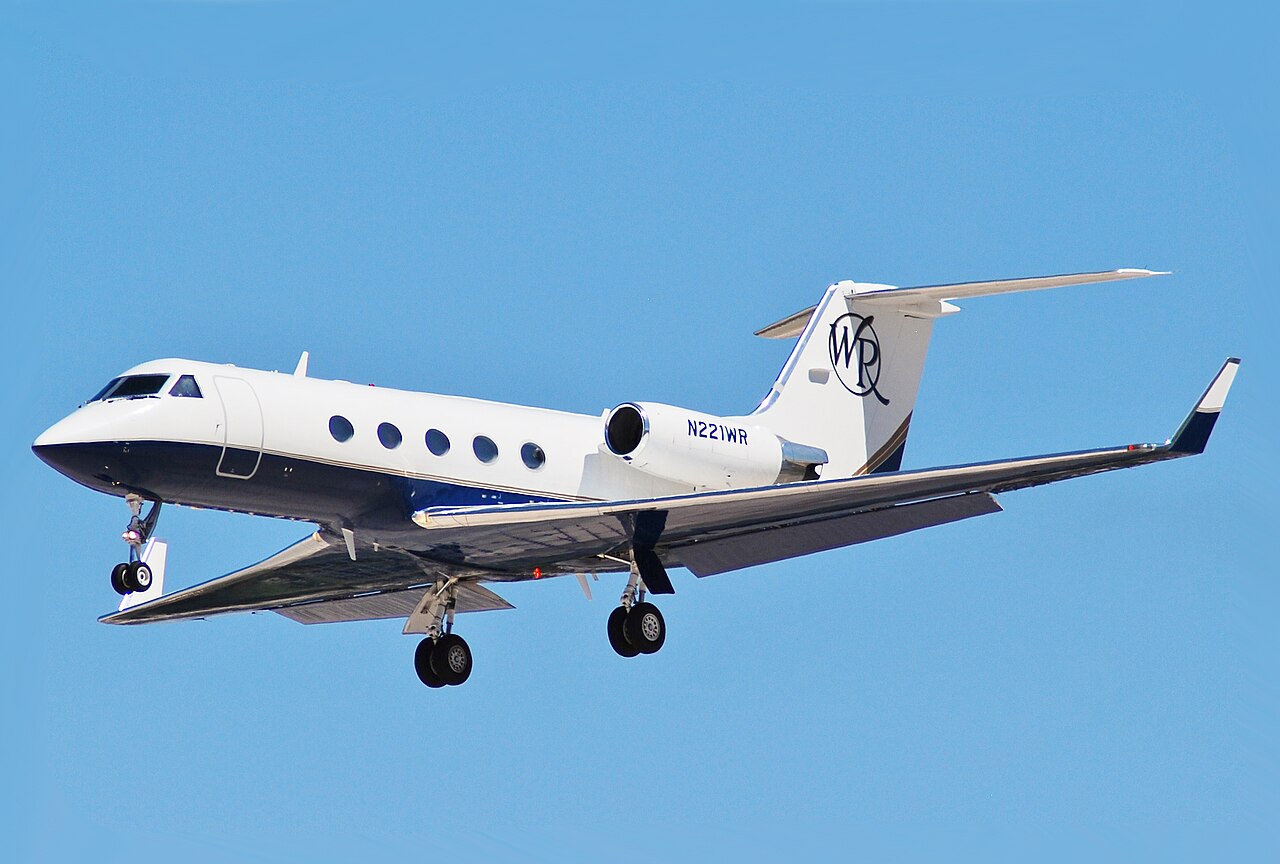
The Gulfstream III is another example of a business jet designed in the late 1970s and belonging to a family known for long-range missions. The model made its first flight in 1979 and was developed to offer performance suitable for intercontinental flights.
Its spacious cabin and long range have made it a popular platform for executive transport and specialized missions. As with other aircraft of the same generation, the remaining operational aircraft may vary significantly in terms of interior, avionics, configuration, and maintenance.
For a Gulfstream III with many years of service, the aircraft’s age is only one of the factors to consider. Upgrades to the onboard systems and compliance with applicable requirements play an important role. The availability of parts, technical expertise, and maintenance support can affect the economic viability of the operation.
The Gulfstream III thus serves as a reminder that an aircraft’s longevity is not merely a matter of structural strength. To remain airworthy, it must be maintained in accordance with the applicable technical and regulatory requirements, with maintenance procedures tailored to its configuration and operational history.
I-LUXO, Luxottica’s Gulfstream G550: Over 20 Years in Operation
The Gulfstream G550 with the registration I-LUXO, associated with Luxottica, is an example of a business jet that entered service in the mid-2000s and is still listed in the aircraft registry. Built in 2005 and delivered in 2006, the aircraft has been in service for over twenty years since its construction.
Its history provides food for thought regarding the operational lifespan of business jets: age alone does not determine whether an aircraft can continue to fly. To assess its condition, one must consider the accumulated flight hours and cycles, maintenance, repairs performed, and compliance with airworthiness requirements.
The case of I-LUXO—which Altreconomia has also covered by tracing its flight paths— serves as a reminder that the lifespan of a business jet does not necessarily coincide with that of the model on the market: an aircraft can continue to be used for many years after it was built, provided its condition and maintenance allow for it.
Maintenance: When Is an Aircraft Still Operational?
Maintenance is one of the key factors determining how long a private aircraft can remain in service. Scheduled maintenance, engine checks, and structural inspections help identify any problems and keep the aircraft in compliance with applicable airworthiness requirements. The availability of replacement parts, certified repair facilities, and technical support also affects the costs and time required to keep a model operational, especially when it has been out of production for many years.
Another factor to consider is the number of pressurization cycles. During flight, the fuselage of pressurized aircraft is subjected to pressure fluctuations that contribute to structural stresses. For this reason, the accumulated cycles and the results of scheduled inspections are important for assessing the condition of an aircraft with a long operational history. They must be examined in conjunction with flight hours and technical documentation; none of these factors alone is sufficient to determine the aircraft’s condition.
Upgrades can also help extend an aircraft’s service life, particularly when they involve avionics and navigation and communication systems. These modifications can make an older aircraft better suited to current operational needs, but they do not replace routine maintenance and must be compatible with the aircraft’s configuration and approved in accordance with established procedures.
Ultimately, an aircraft can continue to fly for decades if its structural and mechanical condition, maintenance, and necessary upgrades allow it to do so: age alone is not enough to determine its efficiency or airworthiness.
How long can older airplanes fly?
Piaggio P.180 Next, Bombardier Learjet 35A, Dassault Falcon 50 and Gulfstream III demonstrate how some designs developed decades ago can still play a role in business aviation. However, not all aircraft of these models are still in service: their ability to continue flying depends on the condition of the airframe and engines, the maintenance performed, and compliance with airworthiness requirements.
An older aircraft may also be considered for a charter flight, provided it is suitable for the required mission. The Piaggio P.180 Avanti, especially in its newer versions such asthe Avanti EVO, is an attractive option for domestic routes such as Milan Linate–Rome Ciampino. The combination of speed, efficiency, and comfort makes it a suitable option for flights of this type, depending on passenger needs and aircraft availability.
If you’re thinking about chartering a private jet, turn to a trusted broker like PrivateJetFinder, who can find an aircraft suited to your trip and verify the details of the offer.
Contact us to check the availability of a Piaggio P.180 Avanti, including the latest versions Piaggio P.180 Avanti II and P.180 Avanti EVO, depending on your route and needs.
The post The Oldest Private Airplanes Still in Service: Models and Features first appeared on Private Jet Finder BLOG.